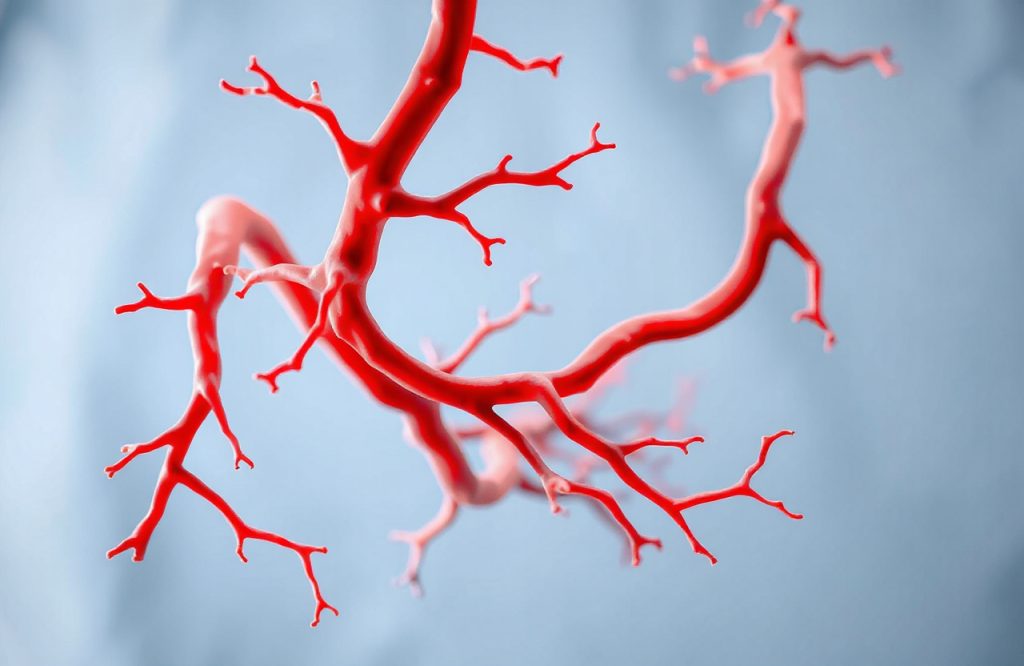
Understanding Metabolically Unhealthy Obesity and Vascular Dysfunction
The Connection Between Obesity and Vascular Dysfunction
Metabolically unhealthy obesity significantly contributes to blood vessel dysfunction. Obesity and metabolic syndrome are closely linked to vascular issues, primarily due to the influence of perivascular adipose tissue (PVAT)—the fat surrounding blood vessels—on vascular function and structure.
The Role of Endothelium in Vascular Health
The endothelium, the outer cell layer of blood vessels, plays a critical role by providing precursors for adipocytes and facilitating angiogenesis, the formation of new blood vessels. The impact of PVAT on vascular health can vary; it may enhance or hinder vascular function based on an individual’s body composition. While anti-inflammatory properties are present in both lean and overweight individuals, they diminish significantly with increased body fat.
Visceral Fat and Metabolic Health
The incidence of vascular dysfunction correlates with the accumulation of visceral fat, leading to the emergence of what is termed the “metabolically unhealthy obesity” phenotype. In contrast, individuals with a predominance of subcutaneous adipose tissue (STA) are classified as having “metabolically healthy obesity,” as STA can counteract harmful lipids.
The Importance of Angiogenesis in Adipose Tissue Development
The formation of new vascular networks is essential for the development of healthy adipose tissue. Endothelial cells play a pivotal role in this process, known as angiogenic-based adipose tissue differentiation. Visceral adipose tissue (VAT) contains a higher concentration of endothelial cells and exhibits increased vascular density, yet it also possesses stronger pro-inflammatory properties that can lead to metabolic and vascular complications associated with obesity.
PVAT’s Role in Regulating Vascular Function
PVAT is crucial for regulating vascular function, exhibiting vasodilator, anti-contractile, and anti-proliferative actions while enveloping various vascular beds. However, in cases of obesity, PVAT enhances the production of inflammatory cytokines, such as IL-1, IL-6, and TNF-alpha, which impair vascular function and disrupt nitric oxide (NO) release.
Insulin Resistance and Vascular Dysfunction
Insulin resistance significantly impacts vascular dysfunction by modulating the PI3-kinase/Akt pathway and the MAP kinase cascade, which are essential for synthesizing NO and endothelin-1 (ET-1). Elevated ET-1 levels are particularly relevant during hyperinsulinemia, contributing to vasoconstriction. Additionally, PVAT correlates with vascular insulin resistance by increasing concentrations of inflammatory cytokines and free fatty acids (FFA).
The Role of Adipokines in Vascular Health
Adipokines, including adiponectin, apelin, and leptin, also influence vascular dysfunction. Their mechanisms are associated with signaling pathways such as phosphatidylinositol 3-kinase, mitogen-activated protein kinase, AMP-kinase, Akt, and nitric oxide synthases, which are involved in the production of NO and ET-1.
Gut Hormones and Cardiometabolic Prevention
Gut hormones appear to play a role in preventing cardiometabolic issues. Patients treated with glucagon-like peptide (GLP)-1 analogs, which stimulate insulin secretion, have shown a reduced risk of cardiovascular disease compared to those receiving placebo treatments. This protective effect seems to stem from the GLP-1 gut peptide’s intrinsic actions rather than just modest improvements in glucose control.
Conclusion: The Complex Interplay of Endothelium and PVAT
Obesity-related vascular dysfunction arises from a complex, bidirectional interaction between the endothelium and PVAT. This relationship is influenced by various signaling molecules, including adipokines and gut hormones, highlighting the intricate biological mechanisms underlying obesity and vascular health.
Written By: Vagner Raso