Understanding Finger Pulse Oximeters
What is Hypoxemia?
Hypoxemia refers to a condition where blood oxygen levels drop below normal. This condition is associated with various diseases impacting the respiratory and cardiovascular systems, including pneumonia, Chronic Obstructive Pulmonary Disorder (COPD), asthma, anemia, and heart diseases.
How Pulse Oximeters Function
A pulse oximeter measures oxygen levels in the blood, providing a non-invasive assessment of oxygen saturation (SpO2). This standard technique is widely utilized in intensive care units (ICUs) for monitoring critically ill patients, during general anesthesia, and throughout the perioperative period. Family physicians also use pulse oximetry to track oxygen saturation in patients with COPD and asthma.
Healthcare professionals depend on pulse oximetry for precise readings of blood oxygen levels to evaluate patients’ respiratory and cardiovascular health. SpO2 levels between 95% and 100% are considered normal, while levels below 90% are deemed critically low and may represent a medical emergency.
Who Uses Pulse Oximeters?
Applications of Pulse Oximeters
Pulse oximeters are devices that monitor both SpO2 and heart rate. They are compact, affordable, lightweight, and easy to operate, providing a painless method of measurement without the need for needles. Typically, these devices are placed on areas of the skin with a higher concentration of blood vessels such as the fingertip, earlobe, or toe.
There are various types of oximeters available for home or clinical use, including finger pulse oximeters and handheld versions. Among these, finger pulse oximeters are the most commonly utilized.
Usage in Different Populations
Home finger pulse oximeters are often prescribed for patients with lung diseases like COPD, allowing for regular monitoring of oxygen saturation throughout the day. Athletes and mountain climbers also utilize these devices to assess their oxygen levels during physical activity and at higher altitudes. For example, hiking or climbing groups often carry portable pulse oximeters to monitor blood oxygen saturation while ascending.
Research published in 2011 in High Altitude Medicine & Biology highlighted that oxygen saturation levels can change rapidly with minor variations in oxygen tension at high altitudes. A 2014 study in the same journal suggested that pulse oximeters might predict acute mountain sickness resulting from sudden drops in oxygen levels at high elevations.
How Do Pulse Oximeters Work?
Mechanism of Operation
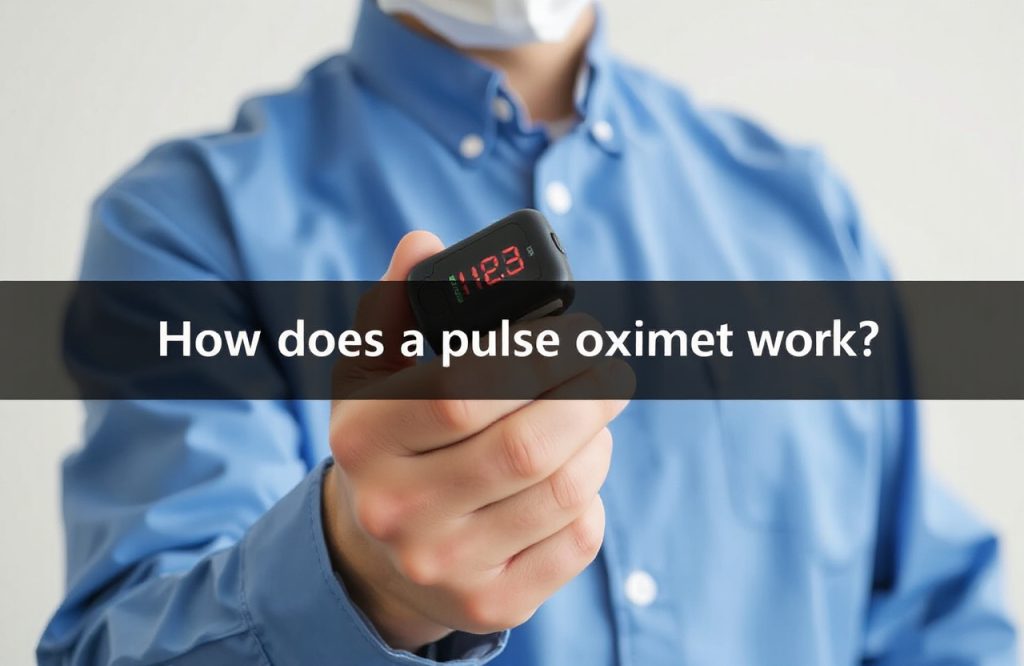
A home finger pulse oximeter attaches to the fingertip and uses light beams from diodes to measure blood oxygen levels. It operates on the principle that red and infrared light is absorbed differently by oxygenated and deoxygenated hemoglobin. By assessing the light absorption changes, the device calculates oxygen saturation levels.
Readings are typically displayed within seconds after the device is activated. The displayed figures include the SpO2 level and heart rate. However, accuracy can be compromised by factors such as movement and low blood flow to the finger.
While the index finger is the most common site for measurement, a study published in 2015 indicated that SpO2 levels may be significantly higher when measured on the middle finger and thumb of the dominant hand.
Availability and Limitations
Many home finger pulse oximeters are accessible through pharmacies, retailers, and online medical supply stores. However, it’s important to note that many low-cost models lack approval from regulatory bodies like the FDA. A 2016 study revealed that numerous inexpensive pulse oximeters yielded less accurate readings compared to their FDA-approved counterparts. Consequently, these devices are recommended for general health monitoring rather than for diagnostic or treatment purposes.
Conclusion
Pulse oximeters are valuable tools for monitoring blood oxygen levels, especially for individuals with respiratory conditions or those engaged in high-altitude activities. Understanding their functionality, proper usage, and limitations can enhance their effectiveness in promoting health and well-being.
References
Sarkar M, Niranjan N, Banyal PK. Mechanisms of hypoxemia. Lung India. 2017;34(1):47-60.
Vold ML, Aasebø U, Wilsgaard T, Melbye H. Low oxygen saturation and mortality in an adult cohort: the Tromsø study. BMC Pulm Med. 2015;15:9.
Jubran, A. Pulse oximetry. Crit Care 19, 272 (2015).
Lene G. Dalbak, Jørund Straand & Hasse Melbye. Should pulse oximetry be included in GPs’ assessment of patients with obstructive lung disease? Scandinavian Journal of Primary Health Care, 33:4, 305-310.
Blood Oxygen Level: Is My Oxygen Level Normal? (2017).
Myatt R. Pulse oximetry: what the nurse needs to know. Nurs Stand. 2017;31(31):42-45.
Chan ED, Chan MM, and Chan MM. Pulse oximetry: Understanding its basic principles facilitates appreciation of its limitations. Respiratory Medicine.
Torp KD, Modi P, Simon LV. Pulse Oximetry. StatPearls.
Buekers J, Theunis J, De Boever P, et al. Wearable Finger Pulse Oximetry for Continuous Oxygen Saturation Measurements During Daily Home Routines of Patients With Chronic Obstructive Pulmonary Disease (COPD). JMIR Mhealth Uhealth. 2019;7(6):e12866.
Why a Pulse Oximeter is Important for High Endurance Athletes. (2017).
Luks AM, and Swenson ER. Pulse oximetry: Pulse Oximetry at High Altitude. High Altitude Medicine and Biology.
Basnyat B. Pro: Pulse Oximetry Is Useful in Predicting Acute Mountain Sickness. High Altitude Medicine and Biology.
Aaron Louie, et al. The Accuracy of 6 Inexpensive Pulse Oximeters Not Cleared by the Food and Drug Administration. Anesthesia & Analgesia.
Basaranoglu G, et al. Comparison of SpO2 values from different fingers of the hands. Springerplus.
Lipnick, Michael S. et al. The Accuracy of Inexpensive Pulse Oximeters. Anesthesia & Analgesia.