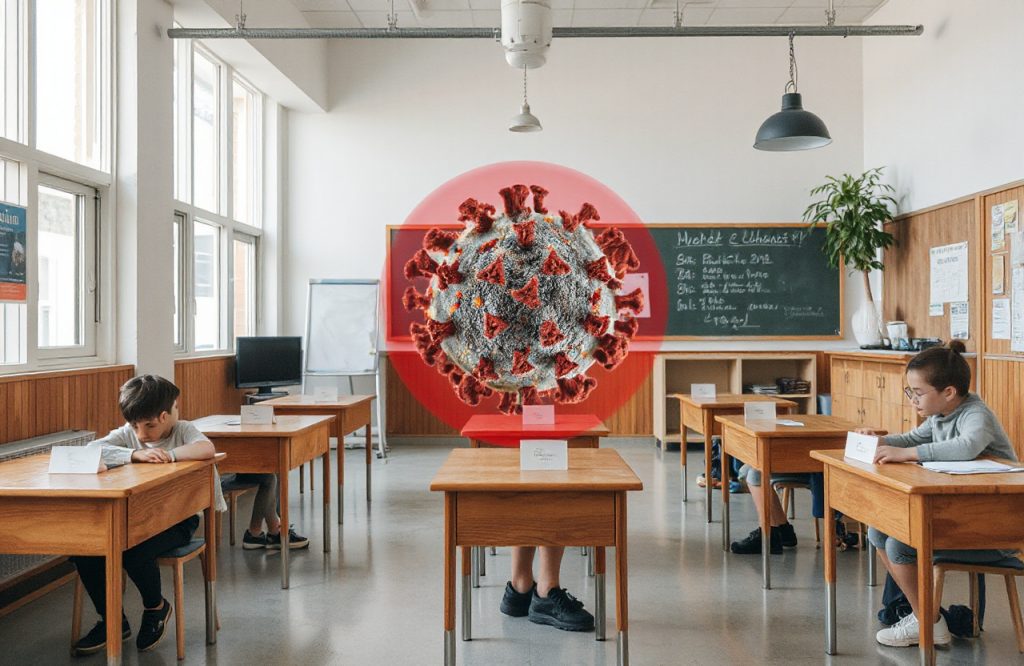
New Study Examines SARS-CoV-2 Transmission in Schools
Impact of the SARS-CoV-2 Pandemic
The global SARS-CoV-2 pandemic has significantly transformed lifestyles across numerous countries. With widespread vaccine availability still several months away, attention has turned to strategies for coexisting with the virus. Educational environments present particular challenges, as many university programs can transition to online formats, while teaching younger students is less adaptable to remote learning. Thus, understanding the transmission risks of SARS-CoV-2 in schools is crucial for safeguarding both students and teachers.
Study Overview
A recent study published in The Lancet Child & Adolescent Health investigates transmission dynamics in Australian educational settings during the early months of the pandemic. This research focused on schools and early childhood education and care (ECEC) facilities in New South Wales, Australia. The study encompassed 3,103 schools and 4,600 ECECs, monitoring index cases from January 25 to April 9, 2020, involving over 140,000 staff and more than 1.2 million students. Distance learning was recommended from March 22 until the end of term on April 9.
Definitions and Protocols
In the context of this study, primary cases were identified as the initial infectious case(s) within a setting, while secondary cases were those likely transmitted in that environment. Close contacts of confirmed cases were instructed to quarantine at home for 14 days, during which they were monitored via telephone, with testing arranged for any symptomatic individuals. When a case was confirmed, the affected school or ECEC was temporarily closed, typically reopening within 48 hours.
Study Findings
During the study period, a total of 41 cases were identified within schools or ECECs. Among these, 19 were in children under 18, with 12 classified as primary cases. In adults, 22 cases were reported, with 15 being primary cases. Notably, the first educational setting case was recorded on March 5. For context, as of May 1, New South Wales had reported 3,033 confirmed cases, of which 97 were in children. This indicates that approximately one in five pediatric cases attended an educational setting while infectious, with most remaining cases associated with household environments.
Implications for Education in the COVID-19 Era
The findings from this study have significant implications for the future of education amid COVID-19. The shift to remote learning initiated on March 23 coincided with a marked decrease in school attendance rates and a subsequent reduction in cases linked to primary and secondary schools. This underscores the positive effect of remote learning in controlling the spread of SARS-CoV-2.
Long-Term Solutions
However, remote learning cannot serve as a permanent solution. The study indicates that effective detection and contact tracing protocols can facilitate the safe resumption of in-person schooling. Out of the 25 school or ECEC settings with confirmed cases, secondary transmission occurred in only four locations. Additionally, the study reveals that while staff represented only 10% of school attendees, they accounted for over 50% of cases, highlighting the need for enhanced protective measures for educators.
Conclusion
Improving safety protocols for staff, combined with robust tracking and tracing measures, could enable a return to normal schooling while minimizing COVID-19 transmission risks. It is essential to consider that this research was conducted in a region with a relatively low SARS-CoV-2 prevalence, necessitating further studies in areas with higher incidence rates before these findings can be generalized.
Written by Michael McCarthy.
Reference: Macartney K, Quinn HE, Pillsbury AJ, Koirala A, Deng L, Winkler N, et al. Transmission of SARS-CoV-2 in Australian educational settings: a prospective cohort study. The Lancet Child & Adolescent Health.
Image by pedro_wroclaw from Pixabay.