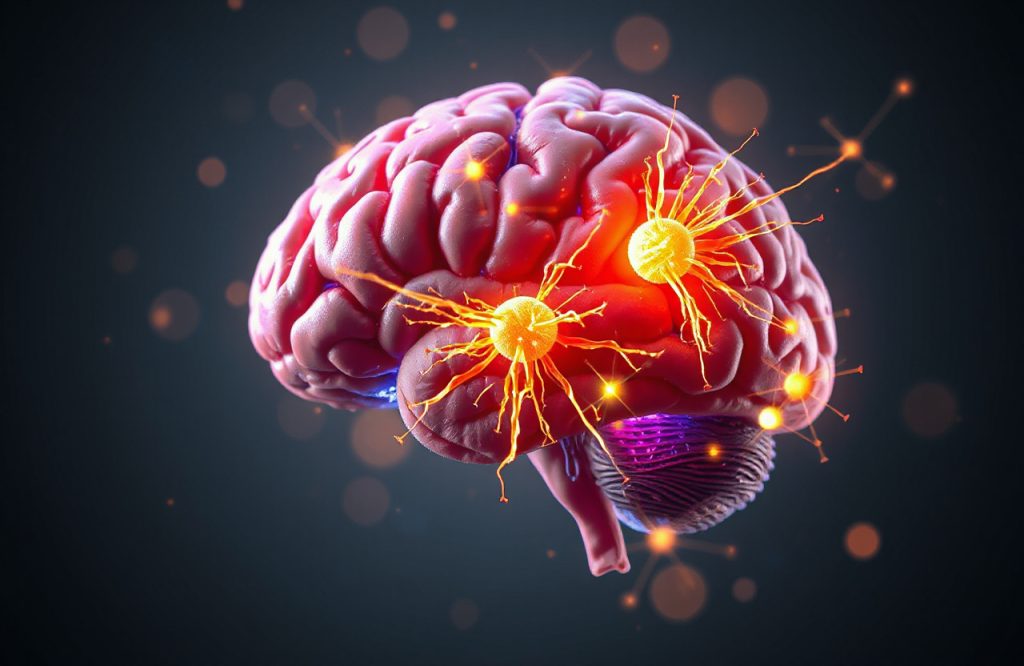
Exploring the Impact of Trauma on Military Personnel
Context of the Research
Military personnel returning from service often face a range of traumatic sights and sounds that can lead to significant psychological challenges. Researchers at UCLA are investigating how these individuals respond to similar stimuli in a safer environment, focusing on the effects of traumatic brain injury (TBI) and post-traumatic stress disorder (PTSD) on fear learning.
The Challenges of TBI and PTSD
Military service can expose individuals to high-stress and traumatic situations, with TBI being a common injury. TBI is known to affect learning and memory, increasing the risk of neurological and psychiatric disorders. PTSD frequently accompanies mild TBI and is triggered by traumatic events. Symptoms of PTSD include intrusive memories, emotional changes, avoidance behaviors, and altered physical and emotional responses.
Understanding Traumatic Memory Encoding
Current research is centered on how traumatic memories are encoded in the brain. Individuals with PTSD often exhibit heightened reactivity to stimuli, even in non-threatening environments, raising questions about the underlying mechanisms.
Insights from Previous Research
The Role of the Amygdala and Hippocampus
Previous studies have identified the lateral amygdala as essential for processing sensory information and forming auditory fear responses, such as recognizing gunshots or explosions. The Dorsal Dentate Gyrus of the Hippocampus is responsible for contextual fear memory formation, determining whether sounds are perceived as safe or dangerous based on the context in which they were heard.
Recent Study on Auditory Sensitivity and Fear Learning
Study Design and Methodology
A recent study published in Scientific Reports by UCLA researchers examined the effects of brain injury on auditory sensitivity and fear memory formation in young adult male rats. The study involved thirty-five rats that underwent either sham surgery or a lateral fluid percussion injury (FPI), which simulates brain movement caused by sound. The rats participated in a Pavlovian experiment where they were first exposed to white noise, followed by a pairing of the noise with an electrical shock.
Findings Related to Fear Behavior
The results showed that rats with FPI exhibited increased freezing behavior compared to those with sham surgery, indicating heightened contextual fear learning. Furthermore, researchers observed elevated levels of Activity-regulated cytoskeletal-associated (Arc) protein in the lateral amygdala and in neurons connecting the thalamus to the amygdala, both critical for fear memory formation. However, there was a noted decrease in Arc levels in the dorsal dentate gyrus, suggesting disrupted contextual processing.
Implications for PTSD and TBI
Link Between Brain Injury and Contextual Differentiation
The findings indicate that the dorsal dentate gyrus may be significantly affected by TBI, as evidenced by lower Arc protein levels. This area is also associated with PTSD. The research suggests that individuals with PTSD and/or TBI may struggle to distinguish the context of sensory stimuli, particularly when those stimuli are linked to past traumatic experiences. This phenomenon is particularly relevant for military personnel who have faced diverse stimuli in high-risk situations.
References
Hoffman, AN., et al. (2019). Scientific Reports. Sensory sensitivity as a link between concussive traumatic brain injury and PTSD.
Wolpert, S. (2019). Eurekalert!. Study reveals how brain injury can lead to post-traumatic stress disorder.
Post-traumatic stress disorder (PTSD). (2018). Retrieved from https://www.mayoclinic.org/diseases-conditions/post-traumatic-stress-disorder/symptoms-causes/syc-20355967.