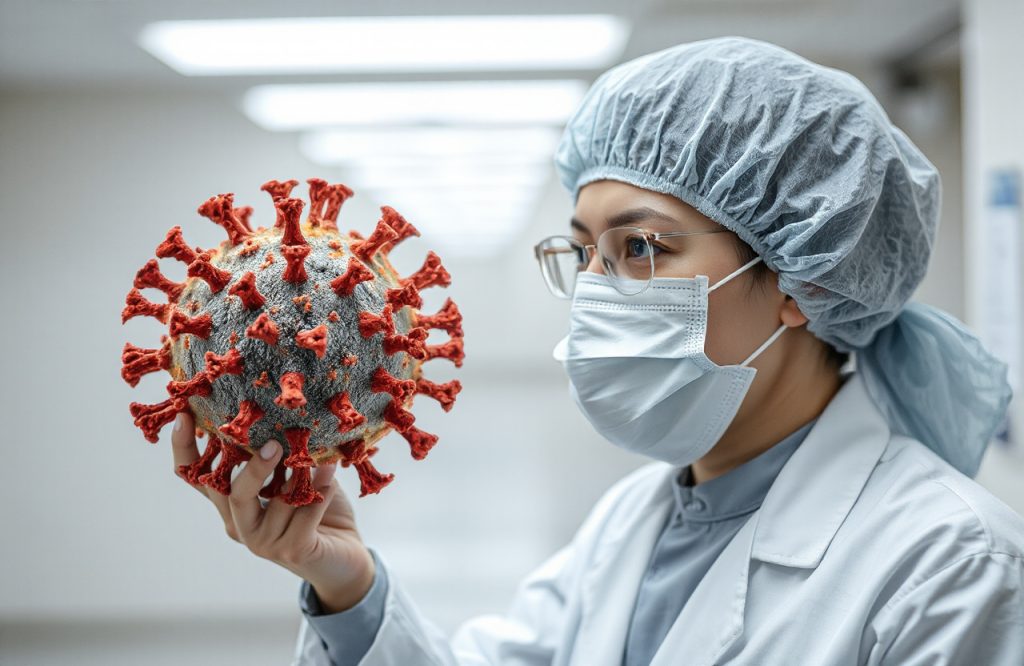
Genetic Sequencing of the New Coronavirus
Background of the 2019 Novel Coronavirus
The first case of the 2019 novel coronavirus was identified in late December 2019, with the initial outbreak linked to the Huanan seafood market in Wuhan, China. Since then, the virus has spread to various countries through travelers returning from Wuhan.
Understanding Coronaviruses
Coronaviruses belong to a family of viruses typically found in animals, including bats, camels, cats, dogs, and mice, but they can occasionally infect humans. Notable coronaviruses that have previously affected humans include the severe acute respiratory syndrome (SARS) and the Middle East Respiratory Syndrome (MERS).
Recent Findings from The Lancet Study
A study published in The Lancet presents insights into the novel coronavirus. Researchers sampled ten genomes from nine patients, eight of whom had visited the Huanan seafood market, while the other patient resided nearby. Lung fluid samples were analyzed, and the genome sequences were compared against a database of other viruses.
Relation to Bat Viruses
The findings revealed that the novel coronavirus is closely related to two bat-origin viruses, sharing 88% of its genome with them. This correlation suggests that bats are likely the original hosts of the virus, though they are not the direct source of human transmission. An intermediary host, which may have been sold at the seafood market, is believed to have facilitated the transfer from animals to humans.
Comparison with SARS
In contrast, the 2019-nCoV shares only 79% of its genome with the human SARS virus. Researchers have examined this similarity and propose that 2019-nCoV may utilize similar mechanisms for human infection as SARS. It is hypothesized that the virus binds to the angiotensin-converting enzyme 2 (ACE2) receptor, although this connection has yet to be confirmed.
Significance of Genetic Similarities
The ten genetic sequences analyzed exhibited a 99.98% similarity in their genomes, indicating that this virus is new to humans and was detected early, providing limited time for mutation. Continuous monitoring of novel coronavirus mutations is essential. Future research may further explore whether 2019-nCoV infects humans in a manner similar to SARS.
References
1. “2019 Novel Coronavirus.” Center for Disease Control and Prevention. 1 Feb 2020. www.cdc.gov/coronavirus/2019-nCoV/summary.html.
2. Lu, Roujian, et al. “Genomic Characterisation and Epidemiology of 2019 novel Coronavirus: Implications for Virus Origins and Receptor Binding.” The Lancet. 30 Jan 2020. www.thelancet.com/journals/lancet/article/PIIS0140-6736(20)30251-8/fulltext.
3. “The Lancet: 2019 Novel Coronavirus is Genetically Different to Human SARS and Should be Considered a New Human-infecting Coronavirus.” EurekAlert!. 29 Jan 2020. www.eurekalert.org/pub_releases/2020-01/tl-pss012920.php.
Image by doodlart from Pixabay.