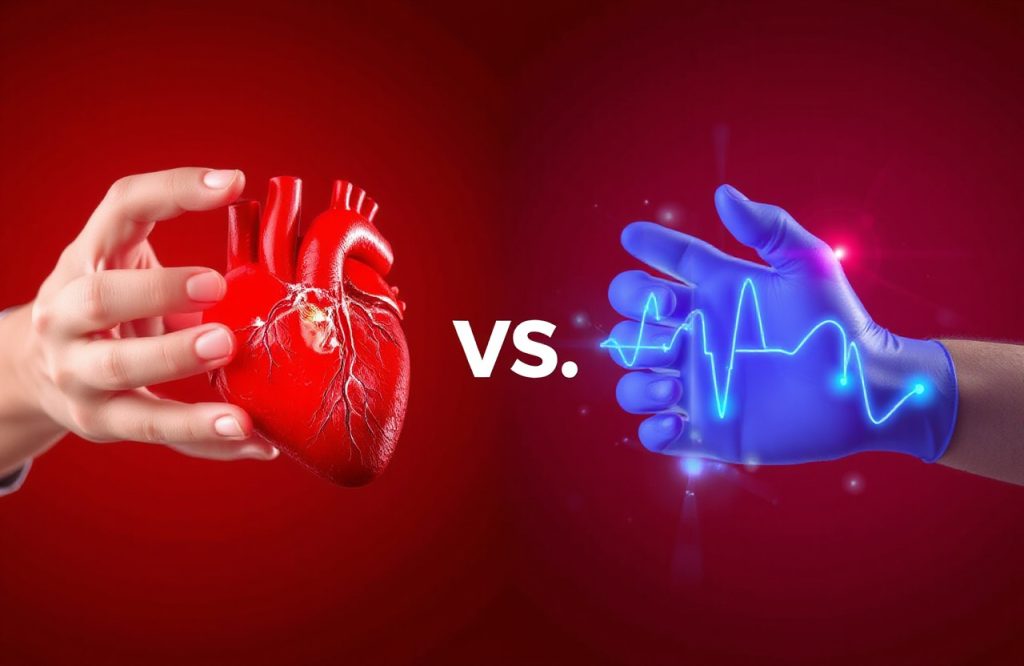
Understanding Heart Attack vs. Cardiac Arrest
Common Confusion
Many individuals often confuse the terms heart attack and cardiac arrest, using them interchangeably. This leads to questions about the distinct differences between the two. While they are related, they represent different medical emergencies.
What is a Heart Attack?
Definition and Causes
A heart attack, medically known as a myocardial infarction, occurs when blood flow to one or more coronary arteries is obstructed. This blockage deprives a portion of the heart muscle of oxygen-rich blood. Such obstructions can develop over time due to blood clots or the gradual accumulation of plaque within the arteries. During a heart attack, the heart may continue to beat but often in an abnormal rhythm, and many individuals may still have a detectable pulse.
Symptoms of a Heart Attack
Common symptoms of a heart attack include:
– Crushing chest pain
– Shortness of breath
– Dizziness or faintness
– Sweating
Women may experience different symptoms, such as:
– Pain in the neck, jaw, or upper back
– Nausea and/or vomiting
– Indigestion
Symptoms can manifest over minutes and may persist for hours or even days. Recognizing these signs is vital, and individuals should call for emergency assistance (999 or 112) immediately. Timely restoration of blood flow to the heart is critical, as delay can lead to irreversible damage to the heart muscle.
What is Cardiac Arrest?
Definition and Mechanism
Cardiac arrest occurs when the heart stops beating unexpectedly due to an arrhythmia, which is an abnormality in the heart’s electrical conduction system. This malfunction prevents the heart from effectively pumping blood throughout the body. Cardiac arrest happens suddenly, leaving the individual unresponsive and typically without breath, or they may exhibit gasping.
Immediate Response to Cardiac Arrest
If someone is suspected of going into cardiac arrest, it is crucial to take immediate actions:
– Obtain an AED (automated external defibrillator) if available, or have someone retrieve one.
– Begin chest compressions immediately and continue until professional help arrives.
– Use the AED upon arrival and only pause CPR to operate the device. Resume CPR after using the AED.
Summary: Heart Attack vs. Cardiac Arrest
In summary, a heart attack is primarily a circulation issue, while cardiac arrest is an electrical malfunction. Although not all heart attacks lead to cardiac arrests, there is a significant connection; heart attacks are a common cause of cardiac arrest.
Call for Help
Recognizing the symptoms of a heart attack and seeking emergency assistance promptly is crucial. Whether facing a heart attack or cardiac arrest, calling for help (999 or 112) is essential. Additionally, consider obtaining certification in Basic Life Support (CPR), as it could make a significant difference in saving a life.
Learn More About Heart Health
For further information, explore resources such as Heart 2 Heart.