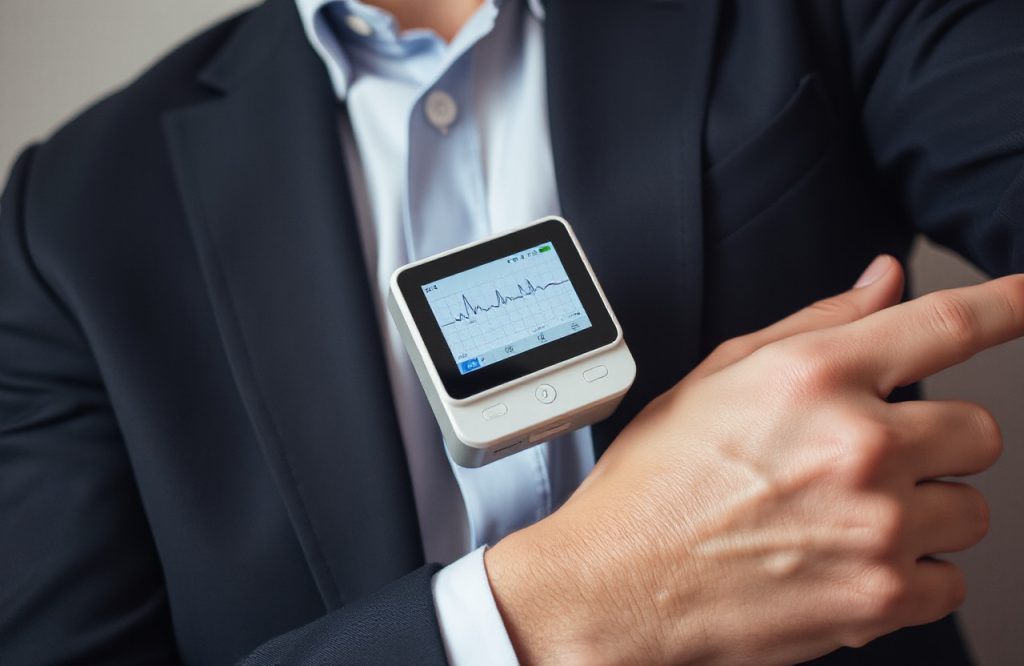
Understanding Personal ECG Monitors
The Basics of Atrial Fibrillation
Have you ever wondered how a personal ECG monitor functions? Atrial Fibrillation (AFib) is recognized as the most prevalent type of arrhythmia, originating from the atria, which are the upper chambers of the heart. Arrhythmias involve irregular heart rhythms that stem from disruptions in the heart’s electrical signals, leading to variations in heart rate—either an increase (tachycardia) or a decrease (bradycardia). AFib specifically results in a rapid heart rate accompanied by an irregular rhythm, often linked to cardiovascular issues such as heart disease or hypertension. Diagnosing AFib can be challenging, as patients may exhibit no symptoms, or the symptoms may mimic those of other cardiovascular conditions. If left untreated, AFib poses a risk of stroke.
What is an ECG?
An electrocardiogram (ECG or EKG) is a diagnostic test routinely conducted to identify atrial fibrillation. This test is performed by qualified medical professionals in clinical or hospital settings and is recognized for being painless and non-invasive. It measures both heart rate and rhythm, producing a graphical representation (waveform) of the heart’s electrical activity.
Types of ECG Devices
While various ECG devices exist, the 12-lead ECG is the standard in clinical environments. This device requires the placement of electrodes at ten specific locations on the body, connected by wires. The 12-lead ECG captures data from twelve different views of the heart’s electrical activity, but it is primarily meant for short-term monitoring with patients at rest.
For ongoing monitoring outside of hospital settings, healthcare providers often recommend personal ECG devices. The Holter monitor is the most frequently prescribed personal device, although it presents challenges as patients must wear it with wiring for a limited time. This has prompted the development of user-friendly personal devices that allow for long-term monitoring.
How Personal ECG Monitors Operate
Advancements in Wireless Technology
Recent innovations in wireless sensor technology have led to the emergence of several types of personal ECG monitors that do not require wires. Portable devices, such as the Kardia Mobile produced by AliveCor, are compact, convenient, and suitable for long-term heart monitoring. Many of these devices are FDA-approved and capable of capturing medical-grade ECG readings.
The Functionality of Kardia Mobile
The Kardia Mobile ECG monitor features two electrodes that the user touches with two fingers from each hand. These electrodes connect wirelessly to a smartphone or tablet, where the ECG results are displayed. Operating with a single lead, the device records data using a single point of contact and comes with a corresponding application that must be downloaded onto the mobile device.
Using a Personal ECG Monitor
Once a patient acquires a personal ECG monitor and downloads the app, they can create an account to input their personal information. After setting up the device, the individual can begin usage. The ECG monitor can record readings in approximately thirty seconds, displaying the results on the connected smartphone or tablet. The accompanying application analyzes the ECG using an algorithm known as Kardia Band, developed by the manufacturer.
This algorithm classifies the EKG into several categories: normal sinus rhythm, bradycardia, tachycardia, atrial fibrillation, unclassified, or unreadable. Results are available instantly and stored for user review. Patients can share ECG images or strips with their doctors to monitor their cardiovascular health.
Research and Recommendations
A 2020 study published in the Neth Heart Journal emphasized the importance of having qualified healthcare professionals manually analyze ECGs recorded by personal monitors. The researchers advocated for enhancing the algorithm to detect and categorize heart rhythms without requiring manual review.
Studies have shown that personal ECG monitors display diagnostic accuracy comparable to that of standard 12-lead ECG devices when detecting AFib. However, further research is needed to validate the efficacy of these devices in diagnosing AFib or other heart disorders in larger clinical populations.
Patients are advised to consult with their healthcare providers before purchasing a personal ECG monitor. While these devices serve as valuable tools for tracking atrial fibrillation, they should not replace professional medical diagnosis or treatment. Personal ECG monitors should be utilized as supplementary resources for monitoring heart health, alongside guidance from healthcare professionals.