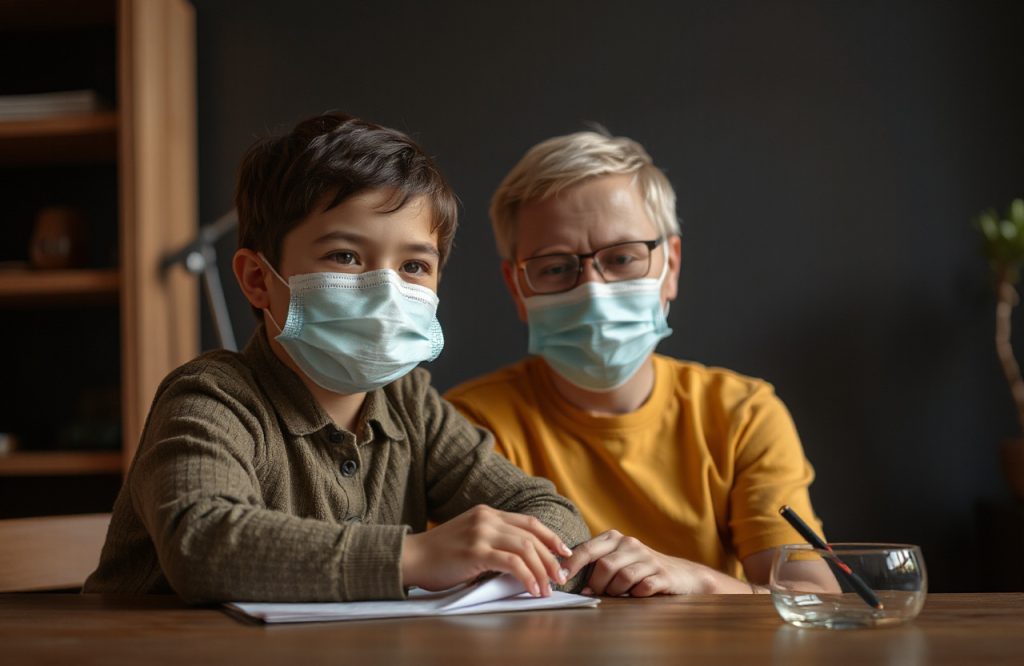
Impact of COVID-19 on Children: Insights from Recent Research
Children Show Resilience Amid Rising Global Cases
As COVID-19 cases continue to surge worldwide, children seem to be a largely unaffected demographic. Limited data exists regarding the prevalence and impact of the virus on this age group.
Expert Commentary and Study Overview
Steven L. Zeichner, the head of UVA Health’s Division of Pediatric Infectious Diseases, along with Andrea T. Cruz, a pediatric emergency medicine physician at Baylor College of Medicine, authored a commentary in the journal *Paediatrics*. Their work focused on a study of over 2,000 cases of suspected or confirmed COVID-19 in children. By comparing this data with earlier research on coronaviruses affecting children, they found that preschool-aged children and infants are more likely to exhibit severe clinical symptoms than older children.
Increased Risks Among Younger Children
The study highlights that younger children, particularly those with underlying pulmonary issues or immunocompromised conditions, face a higher risk of severe outcomes from COVID-19. Research conducted in both China and Norway supports these findings, indicating that the virus was present in a notable percentage of children within these high-risk categories.
Challenges in Symptom Assessment
The presence of other viral infections complicates the evaluation of COVID-19’s true effects on children. Distinguishing symptoms can be difficult, as some may be attributed to other pathogens rather than COVID-19 itself.
Community Transmission Concerns
With the ongoing spread of the virus, community-based transmission remains a significant concern. Zeichner and Cruz caution that although children may often be asymptomatic, they should adhere to recommended social distancing guidelines.
Fecal-Oral Transmission Risks
Previous research indicates that the virus can persist in the stool for several weeks post-diagnosis, raising concerns about fecal-oral transmission, especially in children who are not toilet-trained. This mode of transmission poses particular risks in daycare centers, schools, and home environments.
Differences in COVID-19 Effects Between Children and Adults
Following trends observed in previous infectious diseases, it is likely that the effects of COVID-19 on children will differ from those seen in adults. Understanding these differences is critical for effective pandemic modeling and resource allocation for children who may need care.
Resources for Personal Protective Equipment
For a variety of personal protective equipment options, visit www.medofsupply.com.
References
Barney, Josh. “Understanding How COVID-19 Affects Children Vital to Slowing Pandemic, Doctors Say.” *EurekAlert!*, 19 Mar. 2020, www.eurekalert.org/pub_releases/2020-03/uovh-uhc031920.php.
World Health Organization. “Coronavirus Disease 2019 (COVID-19) Situation Report – 57.” 2020, https://www.who.int/docs/default-source/coronaviruse/situation-reports/20200317-sitrep-57-covid-19.pdf?sfvrsn=a26922f2_4.
Cruz A, Zeichner S. “COVID-19 in children: initial characterization of the pediatric disease.” *Pediatrics*. 2020; doi: 10.1542/peds.2020-0834.
Image by chiplanay from Pixabay.