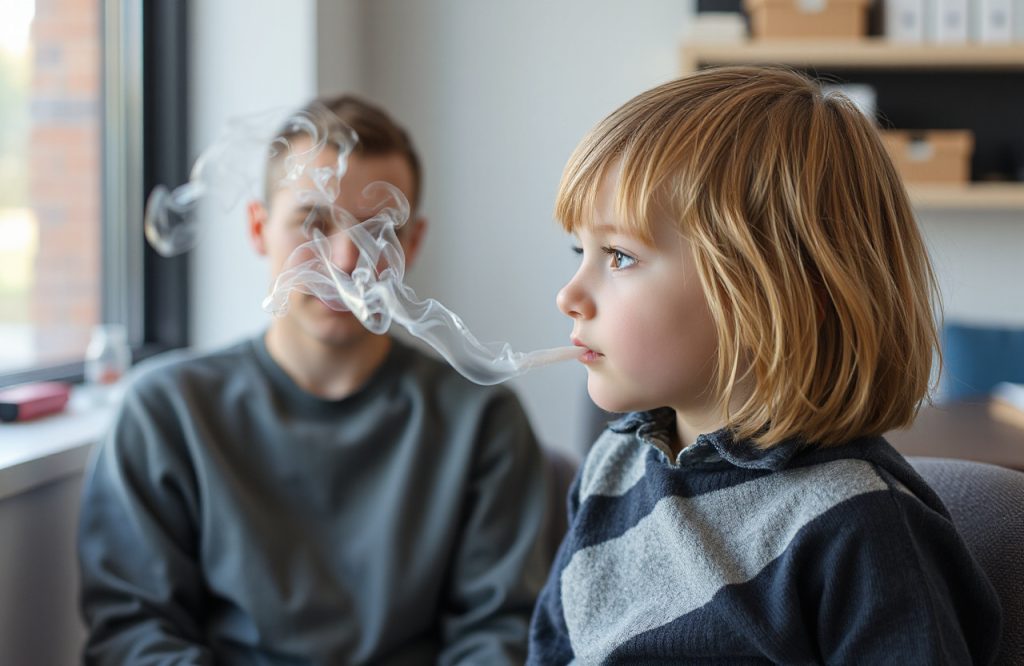
Impact of Second-Hand Smoke on Children’s Eye Health
Introduction to the Study
A recent study published in JAMA Ophthalmology highlights the effects of second-hand smoke on children’s eyesight. Increased public health campaigns have raised awareness about the severe health risks associated with smoking, not only for smokers but also for those exposed to second-hand smoke. Despite these efforts, data from 2017 revealed that 14% of adults aged 18 and older in the United States still smoked actively, indicating that second-hand smoke remains a significant health concern.
The Dangers of Second-Hand Smoke
Inhaling second-hand smoke exposes individuals to approximately 4,000 chemicals, of which 70 are known carcinogens. Unborn babies, infants, and children are particularly vulnerable to the harmful effects of second-hand smoke. Research has linked exposure to a range of health issues, including asthma, respiratory conditions, and sudden infant death syndrome (SIDS).
Link Between Second-Hand Smoke and Eye Health
Recent findings also connect second-hand smoke to children’s eye health, leading to vision problems that can ultimately result in reduced vision or blindness. However, the specific mechanisms by which smoke contributes to these ocular conditions are not yet fully understood.
Research Methodology
To explore this issue further, a team of researchers from China investigated how second-hand smoke affects the choroid, the vascular layer of the eye. They utilized a cutting-edge imaging technique known as swept-source optical coherence tomography to examine the choroidal thickness in children from homes with regular exposure to cigarette smoke and those from smoke-free environments. The study focused on 1,400 children aged 6 to 8 years, with approximately one-third (about 466 children) experiencing regular exposure to second-hand smoke.
Key Findings
The study revealed that second-hand smoke significantly impacts children’s choroidal thickness, leading to a thinner choroid, which increases susceptibility to various eye disorders such as cataracts and age-related macular degeneration (AMD) later in life. Importantly, the effects were found to be dose-related, meaning that children exposed to higher amounts of smoke face a greater risk of adverse outcomes.
Conclusion
The findings suggest that second-hand smoke has additive and cumulative damaging effects on children’s ocular health. This research underscores the necessity of continued public health efforts to reduce smoking and protect vulnerable populations, particularly children.
Reference
Yuan, N.; Li, J; Tang, S; Li, FF; Lee, CO; Ng, MPH; Cheung, CY; Tham CC; Pang, CP; Chen, LJ; Yam, JC. Early Exposure to Second-hand Smoking and Ocular Health—Insights From Latest-Generation Optical Coherence Tomographic Imaging. JAMA Ophthalmol. 2019.
Image by Ralf Kunze from Pixabay.