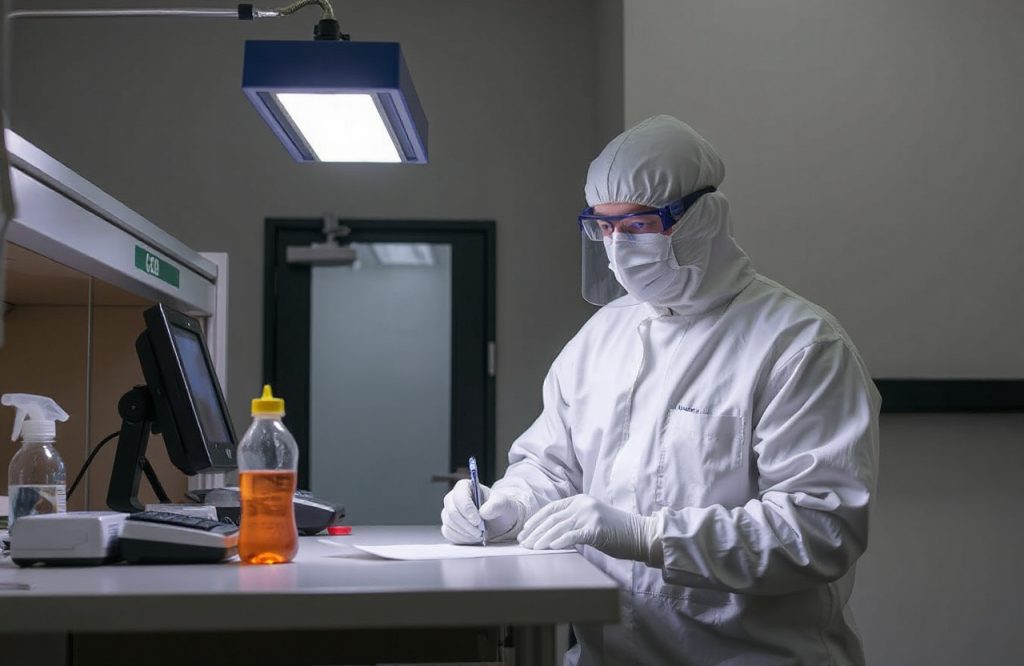
Study on UV Light and SARS-CoV-2 Inactivation
Introduction to SARS-CoV-2 Transmission
A new study explores the potential of ultraviolet (UV) light to inactivate SARS-CoV-2, the virus that causes COVID-19. Throughout the pandemic, SARS-CoV-2 has significantly affected global health. Understanding how the virus is transmitted and identifying effective prevention methods are crucial to mitigating future risks associated with COVID-19. As a respiratory virus, SARS-CoV-2 primarily spreads through close person-to-person contact and respiratory droplets.
Understanding Virus Transmission
Although research on COVID-19 transmission continues to grow, the virus’s behavior remains incompletely understood. This lack of clarity may stem from stringent safety measures required for handling SARS-CoV-2; only specific laboratories equipped to manage the virus can conduct relevant experiments. Additionally, some studies indicate that coronaviruses can survive on surfaces for hours under controlled laboratory conditions. Therefore, while rare, the possibility of transmission via contaminated surfaces cannot be entirely dismissed.
Disinfection Methods
Various methods exist for disinfecting surfaces, including heat application and chemical disinfectants such as hydrogen peroxide, bleach, and alcohol. One widely used technique is UV light, which effectively deactivates pathogens without leaving chemical residues, unpleasant odors, or posing inhalation risks. However, its reliability can vary due to multiple factors that can affect its antimicrobial efficacy.
UV Light Wavelengths and Effectiveness
Light travels as a wave, with its frequency determined by wavelength. UV light ranges from 210 to 328 nanometers, but only specific wavelengths are effective against certain pathogens. To assess the optimal wavelength for inactivating SARS-CoV-2, a study was conducted, with findings published in the journal Applied and Environmental Microbiology. In this study, the virus was cultured in a water-based solution, and multiple 5mL samples were exposed to UV radiation from five different sources, varying from 222 to 282 nanometers.
Study Findings
The results indicated that all UV sources effectively inactivated the virus in solution. Notably, the study revealed that SARS-CoV-2 is inactivated by UV light similarly to murine hepatitis virus. This discovery is significant because it suggests that research could be conducted in more laboratories without the stringent safety protocols required for SARS-CoV-2.
Conclusion and Future Research
The study suggests that UV light with wavelengths between 222 and 282 nanometers may be effective in inactivating SARS-CoV-2. Further research is needed to optimize the effectiveness of UV disinfection technology and to enhance our understanding of SARS-CoV-2’s behavior, ultimately promoting better health outcomes on a global scale.
Reference List
Marques, M., Domingo, J.L. (2021, February). Contamination of inert surfaces by SARS-CoV-2: Persistence, stability and infectivity. A review. Environ Res 193. Doi: 10.1016/j.envres.2020.110559
Ma, B., Gundy, P.M., Gerba, C.P., et al (2021, September). UV Inactivation of SARS-CoV-2 across the UVC spectrum: KrCl* excimer, mercury vapor, and LED sources. Applied and Environmental Microbiology. Doi: 10.1128/AEM.01532-21
Van Doremalen, N., Bushmaker, T. (2020). Aerosol and Surface Stability of SARS-CoV-2 as Compared with SARS-CoV-1. N Engl J Med 382. Doi: 10.1056/NEJMc2004973.
Centers for Disease Control and Prevention (2016, September 18). Guideline for Disinfection and Sterilization in Healthcare Facilities. U.S. Department of Health & Human Services. Accessed 2021, October 18, from https://www.cdc.gov/infectioncontrol/guidelines/disinfection/disinfection-methods/miscellaneous.html
Image by Thiago Lazarino from Pixabay