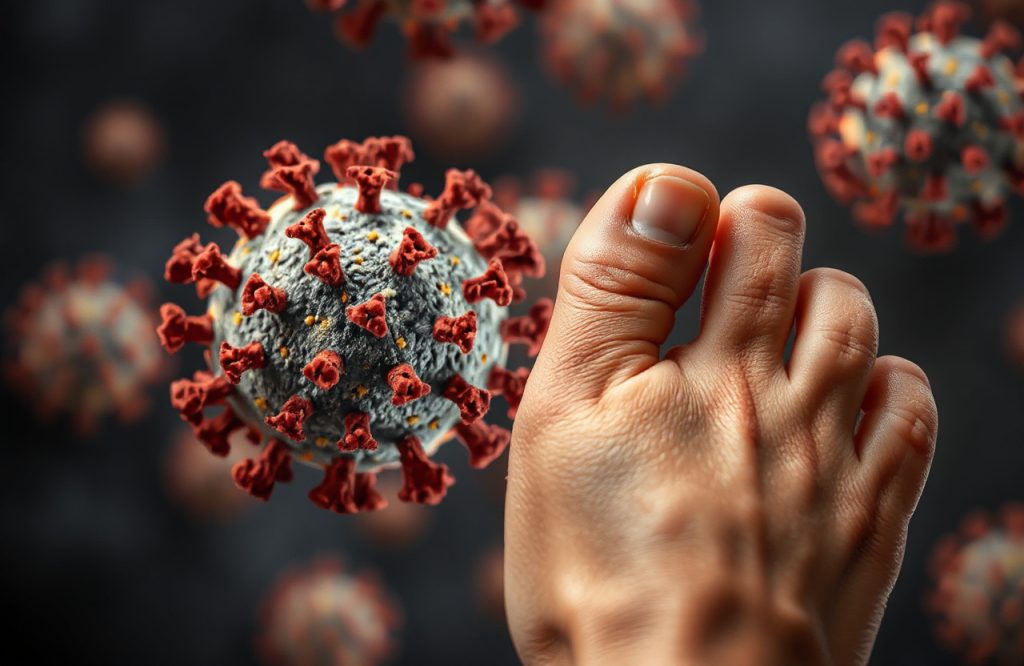
Chilblain-Like Illness in Young People Linked to COVID-19
Overview of COVID-19’s Impact on Children
COVID-19 continues to spread globally, affecting individuals across all regions. Generally, the disease is perceived as less severe in younger patients, often presenting with mild symptoms. However, this does not imply that young patients are immune to complications. One complication increasingly reported among children and young adults is the phenomenon known as “COVID toes.” A recent study published in the British Journal of Dermatology investigates this condition and its association with viral infections.
Understanding “COVID Toes”
The term “COVID toes” refers to the inflammatory lesions that have been observed on the toes of many young individuals during the pandemic. Notably, most patients with this condition do not exhibit respiratory symptoms, and nasal or respiratory samples often return negative for SARS-CoV-2. This situation raises critical questions regarding the causation of these lesions and the implications of negative test results.
Research Study Details
To explore these questions, researchers conducted a retrospective examination of pediatric chilblains diagnosed at a Madrid hospital over four weeks from April to early May 2020. The study included seven pediatric patients aged between 11 and 17. The lesions were generally not painful or itchy and resolved without adverse effects.
Testing and Findings
In six of the seven cases, nasal and oropharyngeal swabs tested negative for SARS-CoV-2. However, biopsies taken from the chilblain lesions revealed positive results for SARS-CoV-2 elements, particularly the virus’s spike protein, which facilitates entry into human cells. Further analysis indicated that inflammation was driven by an accumulation of T cells and lymphocytes.
Using an electron microscope, researchers observed small, spikey particles within the lymph vessel cells in the affected regions, corresponding in size and shape to the SARS-CoV-2 virus.
Implications of the Study
The findings suggest that despite negative results from routine swabs, patients may still be infected with SARS-CoV-2. The chilblain lesions are likely the result of inflammation in lymph vessels instigated by the virus. Chilblains are typically classified as either primary, with no identifiable cause, or secondary, where an underlying condition is present. In this study, none of the patients had pre-existing conditions such as lupus erythematosus or rheumatoid arthritis.
The detection of SARS-CoV-2 protein in biopsy samples, along with the absence of other causative conditions, strongly supports the conclusion that these lesions are indeed linked to the coronavirus. Nonetheless, the authors caution that the interpretation of these results should be approached with care due to the small sample size (n=7) and the study’s limitations stemming from being conducted at a single hospital.
Further research is necessary to validate these findings and to better understand why children and young adults may experience this specific manifestation of SARS-CoV-2 while evading more severe respiratory complications.
Conclusion
As the pandemic continues, ongoing studies are vital to uncover the full spectrum of COVID-19’s effects on different demographics, particularly among the younger population.
Written by Michael McCarthy
1. Colmenero I, Santonja C, Alonso-Riaño M, Noguera-Morel L, Hernández-Martín A, Andina D, et al. SARS-CoV-2 endothelial infection causes COVID-19 chilblains: histopathological, immunohistochemical and ultraestructural study of 7 pediatric cases. British Journal of Dermatology.
Image by Monoar Rahman Rony from Pixabay.