The Rising Burden of Prediabetes and Its Implications
Global and Indian Context
The latest IDF 2025 Atlas reveals a concerning increase in prediabetes prevalence worldwide, with an estimated **634.8 million adults (12%)** projected to be affected by Impaired Glucose Tolerance (IGT) by 2024. In India, the current figure stands at **89.9 million**, expected to rise to **156.7 million by 2050**.
The Association Between Prediabetes and Cancer
Increased Cancer Risk
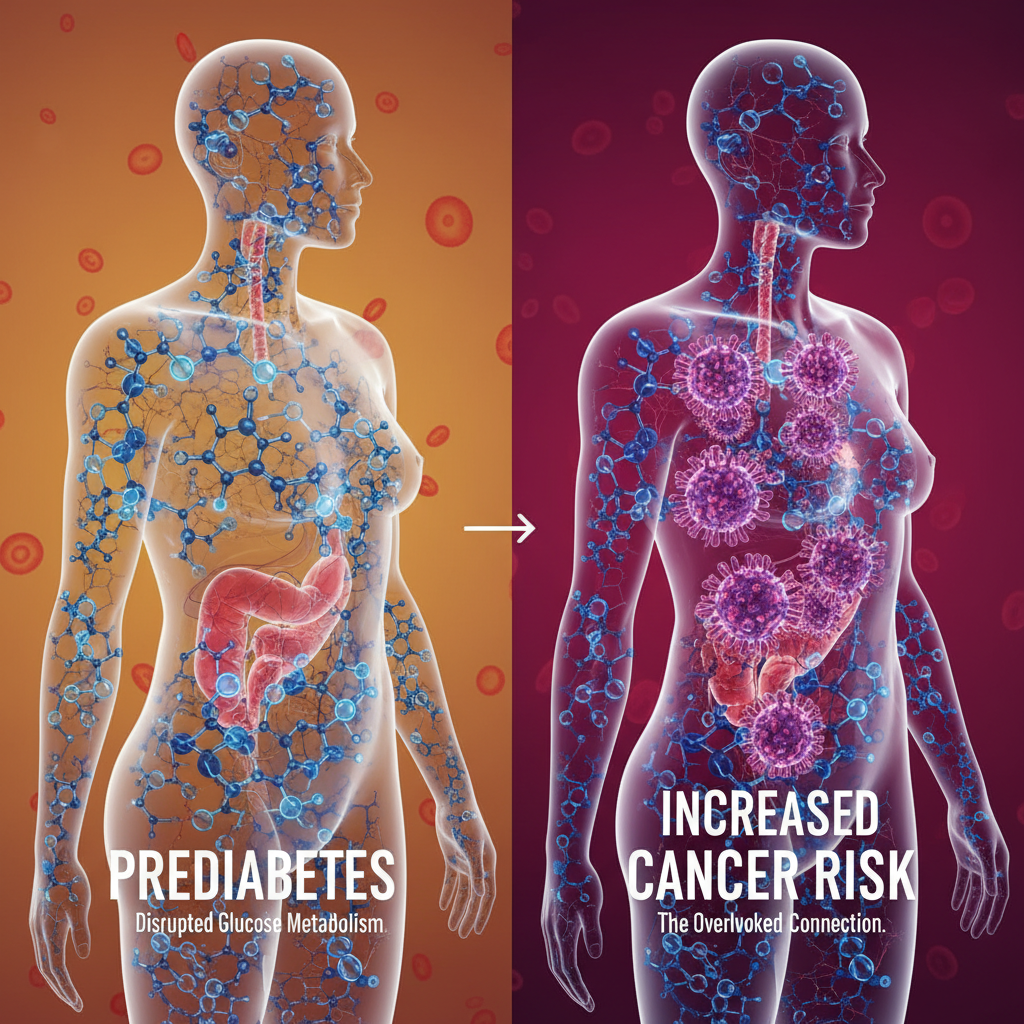
Emerging research indicates that prediabetes not only heightens the risk of progressing to Type 2 Diabetes (T2D) but is also linked to a greater likelihood of developing various cancers, with the relationship varying by cancer type.
Hyperinsulinemic Mechanisms
Insulin is pivotal in tumor progression for individuals experiencing hyperinsulinemia. It promotes oncogenic pathways by interacting with:
– Insulin Receptor (IR)
– Insulin-like Growth Factor-1 Receptor (IGF-IR)
– Hybrid IR-IGF-IR complexes
Implications of Receptor Activation
– **IR Overexpression**: This is noted in breast and prostate cancers and is associated with worse prognoses.
– **Downstream Pathways**: The activation of insulin receptors triggers insulin receptor substrates (IRS-1 or IRS-2/4), leading to:
– RAS/RAF/MEK/ERK cascade for mitogenic signaling
– PI3K/Akt/protein kinase B pathway for anti-apoptotic effects
The structural similarity between insulin and IGF-1 allows them to bind to IR and IGF-IR, which can enhance cell growth and differentiation, particularly through hybrid receptors found in malignant tissues.
Role of Chronic Inflammation
Chronic inflammatory substances such as TNF-α and IL-6, along with the dysregulation of obesity-related adipokines, further aggravate these pathways, contributing to a pro-carcinogenic environment. Epidemiological studies highlight significantly elevated cancer risks for several types, including breast, colorectal, hepatocellular, pancreatic, endometrial, and prostate cancers among those with insulin resistance.
Early Identification and Intervention
Clinical Opportunities
Early recognition of metabolic dysfunction related to prediabetes offers a critical window for intervention. The pathophysiological alterations linked with prediabetes often precede cancer onset, presenting modifiable risk factors for cancer prevention.
Current Evidence on Prediabetes and Cancer Risk
Overview of Evidence
Recent investigations suggest that prediabetes correlates with an **18-42%** increase in cancer risk across various types, primarily attributed to hyperinsulinemic activation of tumor-promoting mechanisms.
The Need for Early Intervention in Prediabetes
Prevalence in India
India reports a notably high prevalence of prediabetes at **15.3%**, surpassing the diabetes prevalence of **11.4%**. This rapid progression, coupled with challenges in lifestyle changes, underscores the urgent need for pharmacological interventions such as metformin.
Recommendations for Early Intervention
The **RSSDI–ESI (India, 2020)** guidelines recommend initiating metformin for:
– Younger individuals with one or more risk factors, irrespective of BMI
– Overweight or obese individuals with Impaired Fasting Glucose (IFG) + IGT or IFG + HbA1c >5.7%
Globally, metformin is approved for prediabetes treatment in at least **66 countries**, reaffirming its vital role in diabetes prevention.
Key Takeaways
– **Global Impact**: Prediabetes affects **634.8 million** adults worldwide, with **89.9 million** cases in India projected to rise to **156.7 million** by 2050.
– **Cancer Risk**: An **18-42%** increased cancer risk is associated with prediabetes due to hyperinsulinemia.
– **Prevalence in India**: The prevalence of prediabetes (15.3%) exceeds that of diabetes (11.4%), highlighting the need for preventive measures.
– **Metformin as a Preventive Measure**: Early intervention with metformin is endorsed by global guidelines for high-risk individuals with prediabetes to reduce associated health risks.
Abbreviations
– **ADA** – American Diabetes Association
– **aHR** – Adjusted Hazard Ratio
– **AKT** – Protein Kinase B
– **BMI** – Body Mass Index
– **CI** – Confidence Interval
– **ESI** – Endocrine Society of India
– **FPG** – Fasting Plasma Glucose
– **GDM** – Gestational Diabetes Mellitus
– **HbA1c** – Hemoglobin A1c
– **HR** – Hazard Ratio
– **IDF** – International Diabetes Federation
– **IFG** – Impaired Fasting Glucose
– **IGF-1** – Insulin-like Growth Factor-1
– **IGT** – Impaired Glucose Tolerance
– **IL-6** – Interleukin-6
– **IR** – Insulin Resistance
– **IRS** – Insulin Receptor Substrate
– **MAPK** – Mitogen-Activated Protein Kinase
– **MONO** – Metabolically Obese Normal-weight Obesity
– **mTOR** – Mechanistic Target of Rapamycin
– **OR** – Odds Ratio
– **PI3K** – Phosphoinositide 3-kinase
– **RAS** – Rat Sarcoma
– **RR** – Relative Risk
– **RSSDI** – Research Society for Study of Diabetes in India
– **SHC** – Src Homology 2 Domain Containing
– **T2D** – Type 2 Diabetes
– **TNF-α** – Tumor Necrosis Factor-alpha