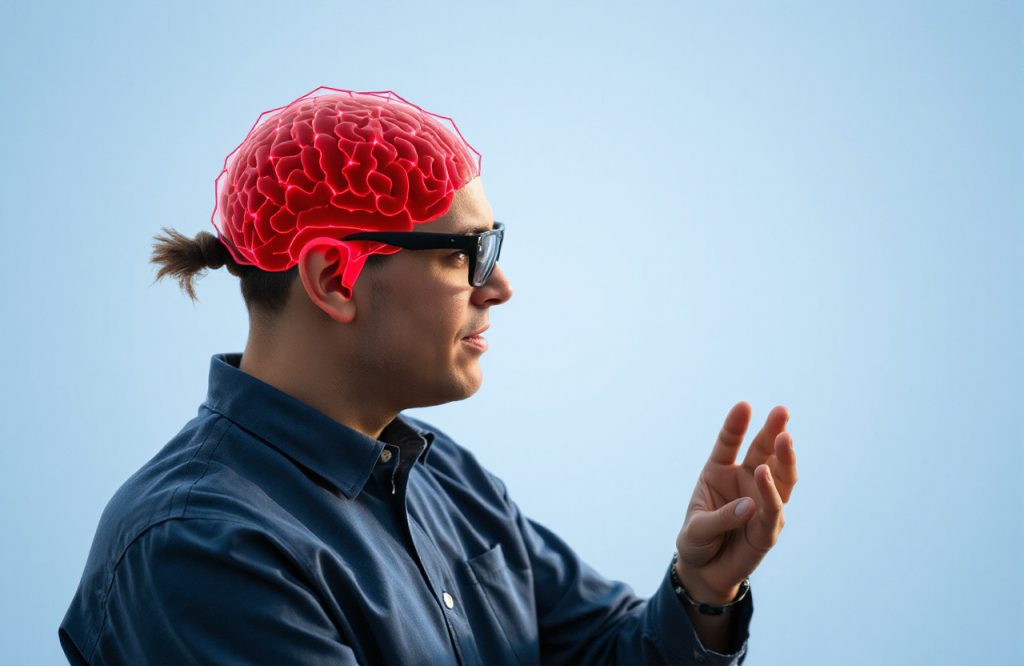
Sci-Fi Brain Implants: The Reality of Deep Brain Stimulation
Sci-fi sounding brain implants, like Elon Musk’s Neuralink, frequently dominate headlines. However, brain implants that help individuals manage neurological symptoms are already in practice. This article explores the concept of Deep Brain Stimulation (DBS), its workings, applications, and origins.
What is Deep Brain Stimulation?
Deep Brain Stimulation (DBS) is a proven treatment for various neurological disorders, including Parkinson’s disease, tremors, and epilepsy. This procedure involves surgically implanting electrodes in specific areas of the brain, chosen based on the patient’s symptoms and needs.
How does Deep Brain Stimulation Work?
Understanding Neuronal Communication
The brain comprises a vast network of nerve cells known as neurons. These neurons group together based on their functions and communicate through pathways that relay messages across different brain regions. Neurons send signals by activating connections called synapses, where neurotransmitters are exchanged to facilitate communication.
Why Stimulate the Brain?
The brain’s network of neurons governs our thoughts and actions. When neuronal communication is disrupted—whether through mistimed signals or prolonged activation—neurological symptoms can arise. DBS aims to correct these timing issues by delivering electrical stimulation to specific brain areas.
Mechanism of Neuronal Activation
DBS utilizes electrodes to stimulate neurons directly, bypassing traditional synaptic connections. This gentle stimulation helps restore the neurons’ rhythms, akin to resetting a malfunctioning clock.
How is Deep Brain Stimulation Performed?
The Surgical Procedure
While the concept of DBS is straightforward, the surgical implantation of the device is complex. A neurosurgeon performs the procedure, inserting electrodes into the brain through small openings drilled in the skull—often while the patient is awake. This allows for immediate feedback to ensure precise electrode placement based on the patient’s responses.
Implanting the Control Device
After the electrode is secured, a pulse generator—similar to a pacemaker—is placed under the skin, usually below the collarbone. This generator connects to the electrodes via thin wires hidden under the skin. The settings for stimulation can be adjusted post-surgery to find the most effective treatment for the patient.
Conditions Treated by Deep Brain Stimulation
DBS is an adaptable treatment method. As of 2024, it is FDA-approved for four primary conditions:
Essential Tremor
Approved in 1997, DBS can significantly reduce symptoms of essential tremor, which causes involuntary trembling during movements, improving quality of life for patients.
Parkinson’s Disease
FDA-approved in 2002, DBS effectively addresses the motor symptoms of Parkinson’s disease, including tremors, rigidity, and bradykinesia, benefiting approximately 75% of patients.
Dystonia
Since its approval in 2003, DBS has been shown to alleviate the muscle spasms associated with dystonia by targeting specific brain areas, resulting in substantial symptom reduction.
Epilepsy
FDA-approved in 2018, DBS is used for treating epilepsy by regulating the abnormal neuronal firing that causes seizures, often targeting the anterior thalamic nucleus.
Emerging Applications
Although currently FDA-approved for these four conditions, DBS is under investigation in clinical trials for other disorders, including obsessive-compulsive disorder, chronic pain, and major depression.
Who Can Receive Deep Brain Stimulation?
DBS is typically not the first-line treatment due to its invasive nature and costs. It is generally considered when medications are ineffective. The selection process for candidates includes evaluating individual responses to treatment, and potential side effects, such as cognitive changes or surgical risks, must be carefully weighed.
The Origins of Deep Brain Stimulation
The development of DBS did not stem from a singular breakthrough but evolved over decades of surgical practices and neurological research. Initial treatments for epilepsy in the 1930s laid the groundwork for understanding brain functions and the effects of electrical stimulation. The advent of smaller, more efficient technologies, like the cardiac pacemaker, facilitated the creation of implantable neurostimulators.
In 1987, Dr. Benabid and his team successfully utilized DBS for Parkinson’s disease, establishing it as a viable treatment option. Today, DBS exemplifies the remarkable advancements in medical technology and neurological treatment.
Conclusion
Deep Brain Stimulation represents a significant leap in managing neurological disorders, showcasing human ingenuity and the potential for continued innovation in medical treatments.