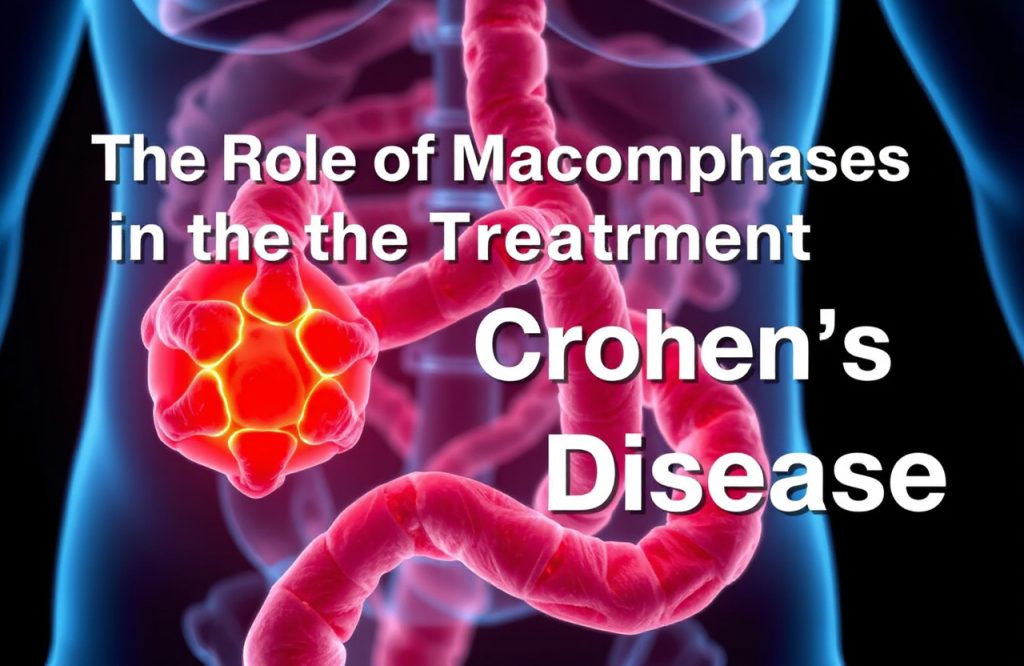
Novel Mechanism for Treating Crohn’s Disease Explored by University of Plymouth Scientists
Understanding Crohn’s Disease
Crohn’s disease is a chronic inflammatory condition affecting the bowel, leading to symptoms such as abdominal cramps, diarrhea, weight loss, and an elevated risk of colorectal cancer. Currently, there is no cure for this condition.
Role of Macrophages in the Immune System
Macrophages serve as the body’s defense cells, responsible for identifying and eliminating harmful pathogens. However, in autoimmune disorders like Crohn’s disease, these cells mistakenly target normal tissues.
Research Focus and Methodology
Researchers at the University of Plymouth conducted a study investigating macrophages as a potential target for Crohn’s disease treatment. The study was published in the journal PLOS ONE. The team specifically examined two macrophage subtypes: the pro-inflammatory M1 subset and the anti-inflammatory M2 subset. Both subtypes were cultured and stimulated with the endotoxin derived from gut bacteria, E. coli.
Findings on Inflammatory Mediators
The analysis revealed that the pro-inflammatory molecule TNFα was suppressed in response to the stimulation. Additionally, there was an increase in negative regulators such as IRAK-M in M2 macrophages and Tollip in M1 macrophages. These modifications are expected to affect the inflammatory response of macrophages.
Implications for Future Research
Dr. Andrew Foey, one of the researchers, commented, “This small step in the understanding of differential signalling of macrophage type may go hand-in-hand with understanding the relapsing/remitting presentation of Crohn’s Disease. It is suggestive of future research endeavors in targeting macrophage responses in the treatment of inflammatory diseases – and it’s a really positive step.”
Conclusion
This study offers new insights into potential treatments for Crohn’s disease. Continued research and development could provide relief for many individuals suffering from this challenging and chronic illness.
References
Al-Shaghdali, K., Durante, B., Hayward, C., Beal, J. and Foey, A. (2019). Macrophage subsets exhibit distinct E. coli-LPS tolerisable cytokines associated with the negative regulators, IRAK-M and Tollip. PLOS ONE, 14(5), p.e0214681.
EurekAlert!. (2019). Research highlights possible targets to help tackle Crohn’s disease. [online] Available at: https://www.eurekalert.org/pub_releases/2019-06/uop-rhp061719.php [Accessed 20 Jun. 2019].