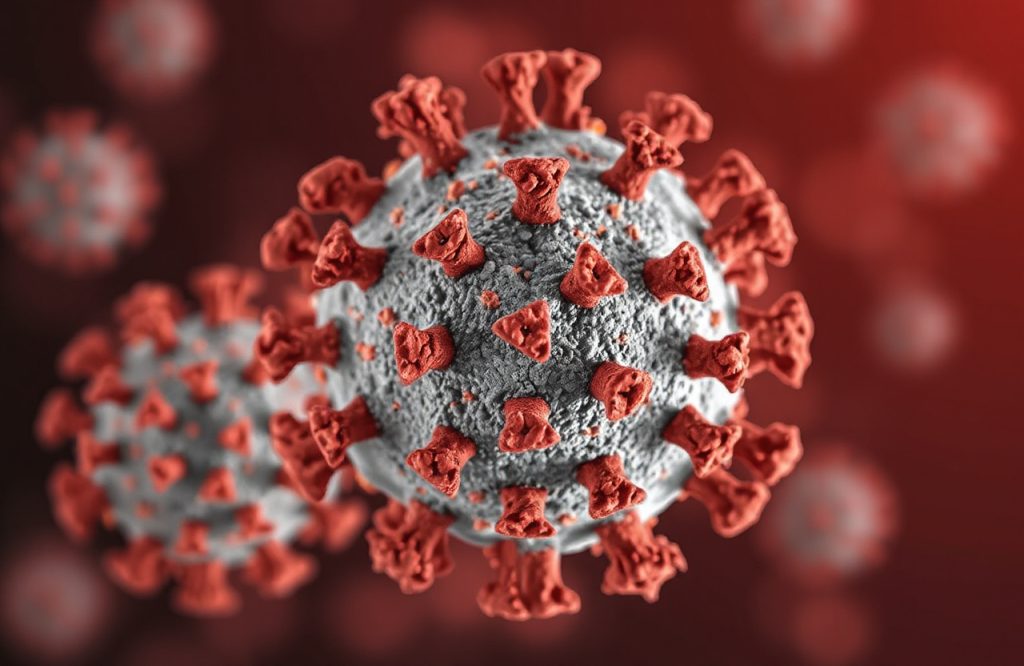
Research Study Investigates SARS-CoV-2 Antibodies and Immunity
Background on COVID-19 and Public Health Measures
As the SARS-CoV-2 pandemic continues to affect global health, officials are implementing various policies aimed at flattening the infection curve. This approach is designed to slow the virus’s spread and prevent healthcare systems from being overwhelmed. Ultimately, these efforts lead to a population that may acquire immunity to COVID-19.
Understanding Immunity and Antibody Testing
A critical question arises: how can individuals ascertain whether they possess immunity to COVID-19, or if they have been unknowingly infected? One method to determine this is through antibody testing for SARS-CoV-2. Scientists have created tests to identify antibodies that indicate prior exposure and potential immunity.
Types of SARS-CoV-2 Antibodies
Research has identified two distinct types of antibodies related to COVID-19. Each antibody type can indicate varying levels of immunity against SARS-CoV-2. The first type attaches to the spike protein receptor binding domain (S-RBD), while the second targets the nucleocapsid protein (N-protein).
Research Findings from the University of Texas MD Anderson Cancer Center
Researchers at the University of Texas MD Anderson Cancer Center conducted a study to evaluate the immunity provided by each type of SARS-CoV-2 antibody. Their findings were published in the journal JCI Insight.
Most commercial antibody detection kits are designed to identify the N-protein, with over 23 million tests available in the United States. However, previous studies have primarily focused on S-RBD antibody production among infected individuals. It remains unclear if the presence of N-protein guarantees the presence of S-RBD or the level of immunity offered by either antibody.
Study Methodology
The study followed 30 severely ill patients diagnosed with COVID-19 and admitted to the ICU for a duration of at least 11 days. Researchers collected 138 blood serum samples from these patients and compared them to 412 samples from healthy individuals collected between June 2017 and December 2019, as well as 52 samples taken between January and June 2020.
The blood serum samples underwent analysis for SARS-CoV-2 antibodies using the enzyme-linked immunosorbent assay (ELISA). This method detects the presence of antibodies and quantifies their levels, specifically targeting S-RBD and N-protein in the samples.
Key Findings
The researchers discovered that 3% of patients from both groups exhibited the N-protein, while only 1.6% had the S-RBD antibody. Individually, the S-RBD antibody conferred 86% immunity, whereas the N-protein provided 74%. Notably, patients with both types of antibodies demonstrated a remarkable 96.5% immunity.
In a press release, senior author Raghu Kalluri, M.D., Ph.D., professor and chair of Cancer Biology, stated, “These findings suggest that detection of N-protein binding antibodies does not always correlate with the presence of S-RBD neutralizing antibodies, and that the presence of the S-RBD antibody is the best indicator of any potential protection against reinfection.”
Reference
McAndrews K, Dowlatshahi D, Dai J et al. Heterogeneous antibodies against SARS-CoV-2 spike receptor binding domain and nucleocapsid with implications on COVID-19 immunity. JCI Insight. 2020. doi:10.1172/jci.insight.142386.
Image by Thiago Lazarino from Pixabay.