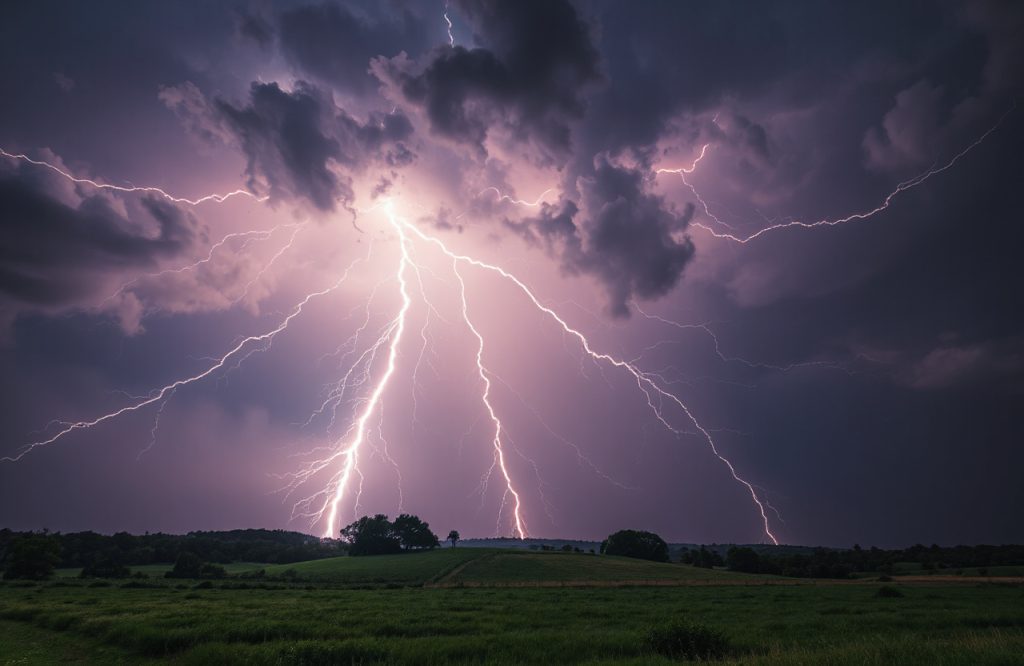
Understanding Thunderstorm Asthma
Definition and Impact
Thunderstorm asthma is a phenomenon characterized by asthma attacks that occur during or following a thunderstorm. These attacks can be severe and potentially fatal if not properly managed. In areas prone to thunderstorms, there is often a corresponding rise in asthma incidents, which can overwhelm local healthcare facilities. A notable instance occurred in Melbourne, Australia, in 2016, where emergency hospital visits surged to four times the usual rate due to acute respiratory distress.
Causes of Thunderstorm Asthma
The exact factors contributing to thunderstorm asthma are still under investigation. Generally, asthma is a respiratory condition marked by inflammation and irritation of the airways. It can be triggered by environmental sensitivities, genetic factors, or lifestyle choices. Common symptoms include coughing, breathlessness, and wheezing.
Allergies as a Trigger
Seasonal allergies, particularly those related to pollen, are significant catalysts for asthma attacks. Thunderstorms can cause pollen grains to rupture, leading to their dispersion in the air—hence the term “thunderstorm asthma.” These pollen particles can infiltrate the lower airways, provoking asthma symptoms. Individuals with a sensitivity to pollen may face a heightened risk of experiencing thunderstorm asthma. Interestingly, those without prior allergies can also be affected.
Research indicates that elevated pollen levels before a thunderstorm correlate with increased incidents of thunderstorm asthma. Various pollen types, including grass, wood, weed, and tree pollen, have been linked to these asthma attacks.
The Role of Fungi
Recent studies investigating environmental conditions during thunderstorm asthma events have suggested that pollen alone does not account for the high incidence rates. Researchers have proposed that fungi may also play a role. Fungi release tiny spores into the air, particularly in damp conditions like those found during thunderstorms. Some studies have reported significant increases in fungal spores in the atmosphere before, during, and after thunderstorms. However, other research did not find a clear connection between fungal spores and thunderstorm asthma, highlighting the need for further investigation into this potential contributor.
The Need for Further Research
Current research on thunderstorm asthma remains limited. Various environmental factors, such as temperature, may also influence pollen levels. Understanding how pollen affects air quality is vital for predicting high-risk periods for thunderstorm asthma and could inform public health strategies designed to safeguard vulnerable populations.
References
1. Dharmage, SC, Perret, JL, Custovic A. Epidemiology of asthma in children and adults. Frontiers in Pediatrics. 2019;7:246. https://www.frontiersin.org/articles/10.3389/fped.2019.00246/full.
2. Idrose NS et al. A systemic review of the roles of grass pollen and fungi in thunderstorm asthma. Environmental Research. 2020;181:108911. doi:10.1016/j.envres.2019.108911.
3. Elliot AJ. The impact of thunderstorm asthma on emergency department attendances across London during July 2013. Emerg Med J. 2014;31(8):675-8. doi: 10.1136/emermed-2013-203122.
4. Davidson AC, Emberlin J, Cook AD, Venables KM. A major outbreak of asthma associated with a thunderstorm: experience of accident and emergency departments and patients’ characteristics. Thames Regions Accident and Emergency Trainees Association. BMJ. 1996;312(7031):601-4. https://doi.org/10.1136/bmj.312.7031.601.
5. Andrew E. Stormy weather: a retrospective analysis of demand for emergency medical services during epidemic thunderstorm asthma. BMJ. 2017;359:j5636. https://doi.org/10.1136/bmj.j5636.
6. Eder W, Ege MJ, von Mutius E. The asthma epidemic. N Engl J Med. 2006;355(21):2226–35. doi: 10.1056/NEJMra054308.
7. Anderson W, Prescott GJ, Packham S, Mullins J, Brookes M, Seaton A. Asthma admissions and thunderstorms: a study of pollen, fungal spores, rainfall, and ozone. QJM: Int. J. Med. 2001;94(8):429-433. doi: 10.1093/qjmed/94.8.429. https://www.frontiersin.org/articles/10.3389/fped.2019.00246/full.