Amblyopia Overview
Definition and Characteristics
Amblyopia, often referred to as lazy eye, is a condition where the eye fails to achieve normal visual acuity or sharpness.
Current Treatment Approaches
Traditional treatments for amblyopia include refractive correction, patching the stronger eye, or using atropine penalization on the unaffected eye.
Alternative Treatment Strategies
Binocular Video Games as a Treatment
Recent research has explored alternative treatments that involve presenting different contrasts to the eyes through engaging mediums requiring sustained visual focus, such as video games.
Study on Binocular Video Games
In this context, a study was conducted by researchers from Canada, Australia, and Hong Kong to examine the impact of binocular video games on visual function. The findings were published in JAMA Ophthalmology.
Study Details
Participant Recruitment
The study involved 115 participants diagnosed with amblyopia, all aged over seven years, with a mean age of 21.5 years.
Study Design
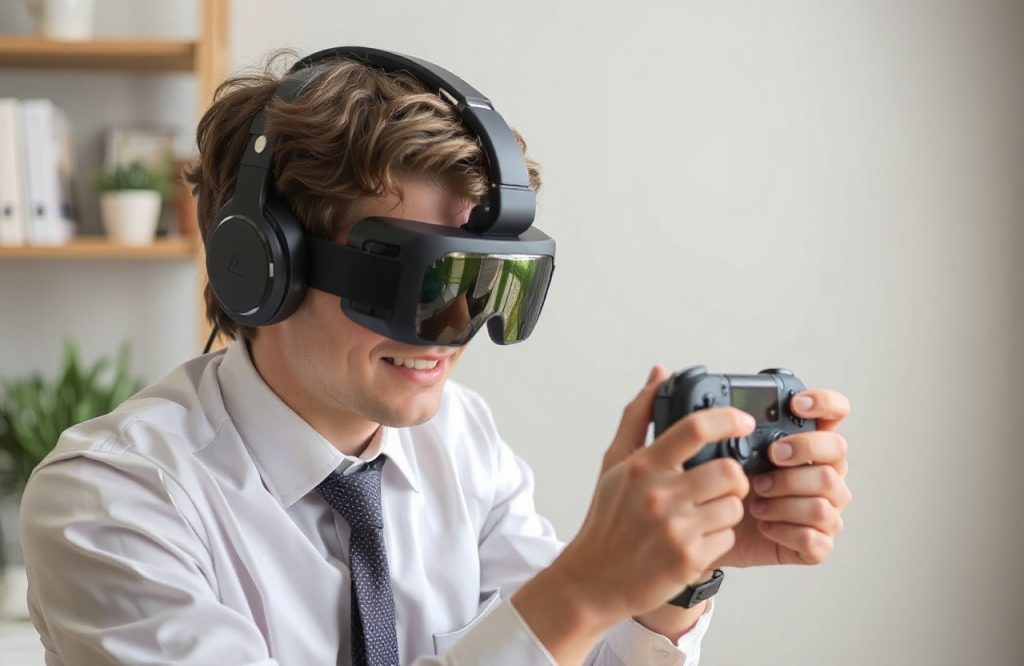
Participants were randomly assigned to either a treatment group or a placebo group. Each participant played a specially designed falling blocks-style video game on an iPod Touch for one hour daily over a six-week period. Both groups wore specially designed glasses, with the treatment group experiencing visual game elements divided between the two eyes with contrast, while the placebo group saw identical views in each eye.
Assessment Metrics
Amblyopic visual acuity was evaluated at baseline and again at the six-week follow-up. Secondary outcomes included compliance, stereoacuity, and interocular suppression. Participants were also assessed for their gameplay abilities at baseline and during periodic follow-ups.
Results and Findings
Visual Acuity Outcomes
The study did not reveal any statistically significant differences in amblyopic visual acuity between the treatment and placebo groups after the six-week period.
Game Play Duration
There was also no significant correlation found between the amount of time spent playing the game and the primary or secondary outcomes measured.
Comparison with Previous Research
These findings align with earlier studies comparing binocular and non-binocular treatments for amblyopia, which similarly reported nonsignificant differences.
Limitations and Considerations
Potential Influencing Factors
The authors of the study suggest that the lack of significant results may stem from various factors beyond the treatment’s effectiveness.
Study Limitations
Despite rigorous double-blind protocols, certain limitations affected the study’s control. Since participants primarily played the game at home, researchers could not ensure proper gameplay or consistent use of the glasses, which may have significantly influenced treatment outcomes.
Conclusion
Overall, the results indicate that binocular video games may not be a viable treatment option for individuals suffering from amblyopia.
Reference
Gao et al. Effectiveness of a Binocular Video Game vs Placebo Video Game for Improving Visual Functions in Older Children, Teenagers, and Adults With Amblyopia: A Randomized Clinical Trial. JAMA Ophthalmology. 2018 Feb 1;136(2):172-181. doi: 10.1001/jamaophthalmol.2017.6090.