The Impact of Nature on Emotional Well-Being for City Dwellers
Urbanization and Mental Health Challenges
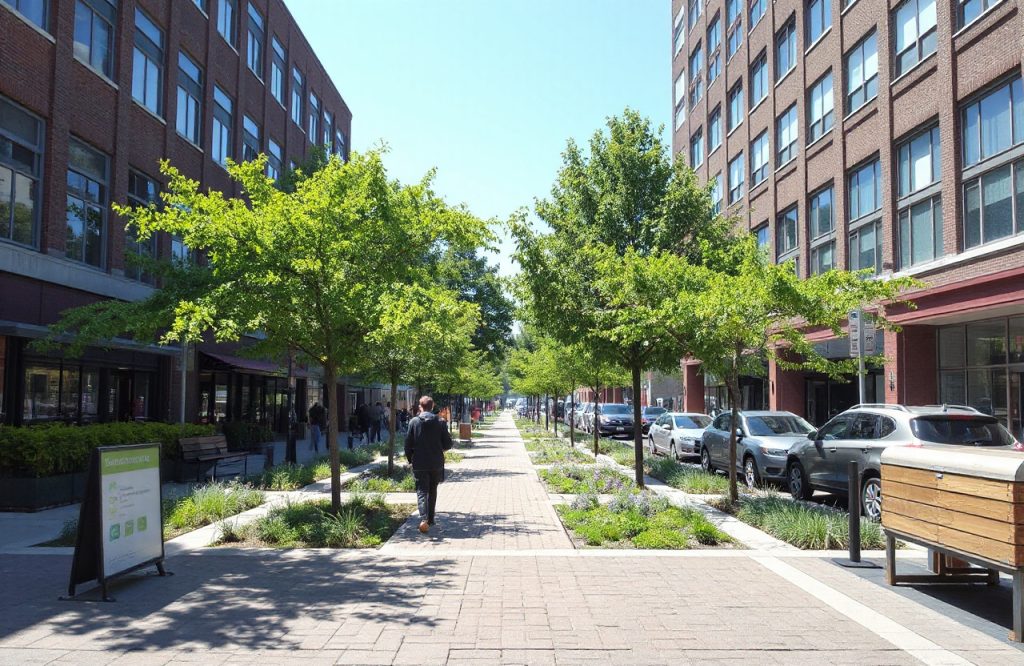
For individuals living in urban environments, enhancing emotional well-being may hinge on increased time spent in natural settings. With a majority of the global population now residing in cities, the expansion of urban areas has coincided with rising incidences of mood disorders. Emerging research underscores the restorative effects that nature can have on personal well-being. Studies have shown that exposure to natural environments and biodiversity is linked to improved mental and cognitive health. Urban greenspaces, particularly parks, may serve as a remedy for the environmental and psychological pressures inherent in city living.
Groundbreaking Study on Social Media and Urban Greenspaces
A recent study conducted by a team at the University of Vermont explored the emotional changes linked to visits to urban parks through an innovative approach using Twitter data. This research utilized social media to analyze a diverse group of Twitter users before, during, and after their visits to parks. By geotagging tweets based on latitude and longitude, researchers were able to categorize tweet activity by park type. Collaborating with the U.S. Forest Service, UVM scientists developed technologies to map urban vegetation. Jarlath O’Neil-Dunne, director of UVM’s Spatial Analysis Laboratory and co-author of the study, noted, “That’s what really enabled us to get an accurate understanding of how the greenness and vegetation of these urban areas relates to people’s sentiment there.”
Methodology: Measuring Happiness Through Tweets
Over a span of three months, researchers analyzed tweets from 4,688 users within the San Francisco park system. The emotional tone of each tweet was assessed using the Hedonometer, an online word analysis tool created by UVM and The MITRE Corporation. This tool includes a dictionary of over 10,000 common English words rated on a happiness scale from 1 (sad) to 9 (happy). For instance, the word ‘sunshine’ scored 7.9, while ‘traffic’ scored 3.3. Neutral words like ‘and’ and ‘the’ scored 5.33 and 4.98 respectively. The average happiness score was determined for tweets collected before, during, and after park visits.
Findings: Mood Elevation Comparable to Holiday Cheer
The study, published in People and Nature, an open-access journal of the British Ecological Society, revealed that Twitter sentiment significantly increased during visits to urban greenspaces, with elevated mood levels persisting for several hours post-visit. This boost in happiness was found to be comparable to the spike in sentiment observed on Christmas Day across Twitter.
Influence of Park Type on Mood Enhancement
The research also indicated that the type of park played a crucial role in the extent of mood elevation. Parks with more greenery and vegetation produced a greater increase in happiness. Larger regional parks, featuring more tree cover and biodiversity, elicited more positive tweets compared to smaller neighborhood parks. Conversely, civic plazas and squares generated the least mood enhancement.
Understanding the Psychological Mechanisms at Play
Despite the increasing interest in the mental and cognitive benefits of natural environments, the underlying psychological mechanisms remain largely unexplained. Researchers propose that time spent in nature enables recovery from the attention demands of modern life. The study observed a reduction in linguistic markers indicative of focused, analytical thinking following park visits. Chris Danforth, a co-author of the study and professor at UVM’s Complex Systems Center, stated, “While we don’t address causality in our study, we do find that negative language – like ‘not,’ ‘no,’ ‘don’t,’ ‘can’t,’ – decreased in the period immediately after visits to urban parks, offering specific linguistic markers of the mood boost available outside.”
Additionally, an increase in positive words such as ‘beautiful’, ‘fun’, and ‘enjoy’ was noted, suggesting lower stress levels and heightened positive emotions. The frequency of first-person pronouns like ‘I’ and ‘me’ also declined, indicating a shift towards a more collective, prosocial mindset.
Policy Implications and Urban Planning Considerations
The authors of the study hope that their findings will encourage the conservation of natural spaces to protect biodiversity and enhance mental health. Expanding urban greenspaces may allow park planners and public health officials to allocate resources towards the types of parks that yield the greatest health and well-being benefits.
References
Schwartz, A. J., Dodds, P. S., O’Neil‐Dunne, J. P. M., Danforth, C. M. & Ricketts, T. H. Visitors to urban greenspace have higher sentiment and lower negativity on Twitter. People and Nature pan3.10045 (2019). doi:10.1002/pan3.10045
Brown, J. City parks lift mood as much as Christmas, Twitter study shows. EurekAlert! (2019).