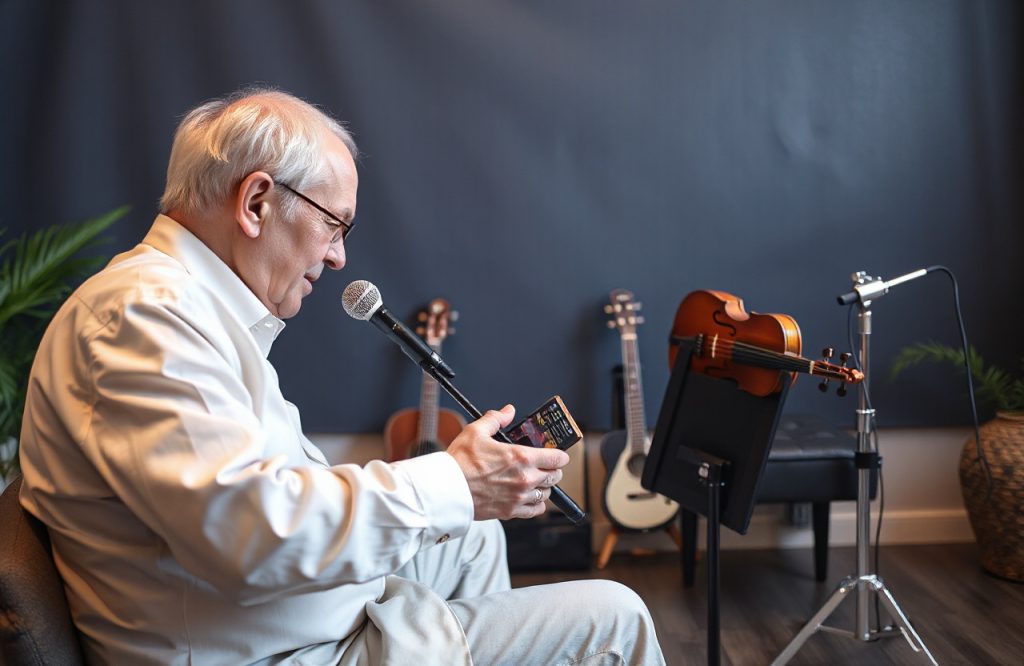
Music Therapy: A Promising Approach for Alzheimer’s Treatment
Introduction to Music Therapy
Music therapy is emerging as an effective treatment for Alzheimer’s and other neurodegenerative diseases. Ithaca College, in collaboration with a student organization, is providing music therapy services to residents in local nursing homes. The positive response to this initiative may lead to the introduction of a Music as Medicine major or minor at the college.
The Science Behind Music Therapy
Music therapy leverages the brain’s unique response to music, activating the right hemisphere while language processing occurs in the left hemisphere, specifically in Broca’s and Wernicke’s areas. This approach has been particularly beneficial for patients with aphasia, which can result from trauma or strokes affecting these areas. For Alzheimer’s patients, who experience widespread and unpredictable brain tissue degeneration, music therapy can stimulate various brain regions and elicit well-rehearsed responses. Familiar lyrical pieces can trigger memories and responses, making music therapy a valuable tool in Alzheimer’s care.
Exploring Music as Medicine at Ithaca College
Ithaca College has introduced a course titled “Exploring Music as Medicine,” which trains students to perform for individuals with dementia and Alzheimer’s. As part of the course, students are assigned to local nursing homes for practical experience. For example, one student sang “Over the Rainbow” to a resident, prompting her to share stories about her life and children.
Healing through Musical Companionship
Inspired by the course, student Ryan Mewhorter established a student organization called Healing through Musical Companionship. Members of this organization visit a local rehabilitation and nursing center weekly, providing live performances and playing recorded music for patients. Mewhorter emphasizes that live performances foster a more personal connection compared to recorded music, which often involves headphones that can limit communication. Live music allows for easier sing-alongs and can be adjusted to suit the patients’ needs.
Future Prospects for Music as Medicine
The enthusiasm surrounding the music therapy course and the student organization has sparked discussions about the potential for a Music as Medicine major or minor. This new academic program would draw from various disciplines, including music, gerontology, and speech-language pathology. Although still in its early stages, this initiative shows significant promise for impactful and beneficial outcomes in the field of music therapy.
Conclusion
As music therapy continues to demonstrate its effectiveness in treating Alzheimer’s and other neurodegenerative diseases, the future looks bright for its integration into academic programs. The collaboration between Ithaca College and local nursing homes highlights the transformative power of music in enhancing the quality of life for patients.
Written By: Brian Jones
Add to Flipboard Magazine.