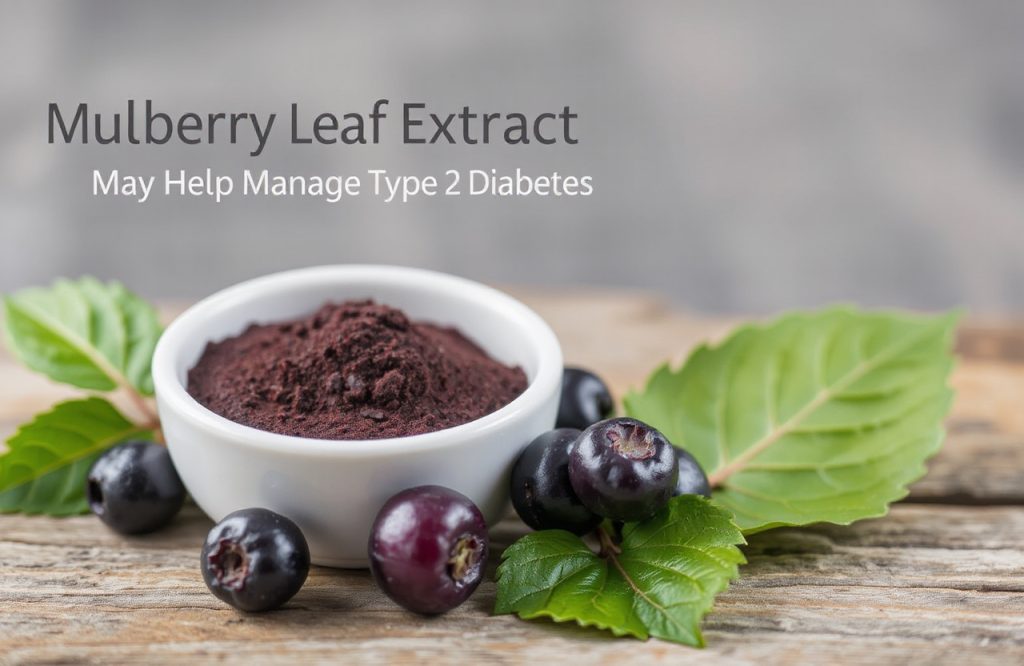
Exploring the Benefits of Mulberry Leaf Extract for Type 2 Diabetes
Complementary Therapies for Chronic Diseases
Complementary therapies are increasingly being considered by patients dealing with chronic diseases. Recent research indicates that mulberry leaf extract may play a role in reducing blood glucose levels after meals for individuals with type 2 diabetes.
Historical Use and Preliminary Findings
Mulberry leaves have long been used in Asia to address glucose irregularities. Studies involving diabetic rats have shown that the consumption of mulberry leaf extract can lead to a decrease in blood glucose following meals. Although similar outcomes have been observed in uncontrolled and short-term human studies, further detailed research is essential to evaluate the efficacy of mulberry leaves as a complementary treatment.
Recent Study at the University of Mississippi
A research team at the University of Mississippi conducted a randomized double-blind placebo-controlled pilot study to investigate the effectiveness of mulberry leaf extract as a complementary therapy for type 2 diabetes. Findings from this study were published in the journal *Complementary Therapies in Medicine*.
Study Design and Methodology
The study involved 24 non-insulin dependent type 2 diabetic patients who were already on oral therapies. The investigation was divided into three phases:
– **Phase One:** All participants took a placebo three times daily for two weeks to establish baseline blood glucose levels.
– **Phase Two:** Patients were randomized into two groups—one receiving a placebo and the other receiving 1000 mg of mulberry leaf extract, both taken three times daily with meals for three months. Follow-ups at four weeks and three months included clinical examinations, questionnaires, self-monitoring of blood glucose (SMBG), and safety laboratory tests.
– **Phase Three:** A1C hemoglobin assessments were conducted to evaluate average blood glucose levels over the preceding three months.
Results and Observations
Out of the 24 patients who participated, 17 completed the study. Those who consumed mulberry leaf extract exhibited a significant reduction in post-meal SMBG levels after three months compared to the placebo group. However, pre-meal blood glucose levels did not show significant changes. Some patients experienced gastrointestinal side effects, but these were consistent across both groups. A1C assessments revealed no significant differences between the baseline and follow-up levels for either group.
Limitations and Future Research
The authors noted that the discrepancy between SMBG and A1C results may stem from the duration of the study, suggesting that at least six months of treatment might be necessary to observe changes in A1C levels. Other limitations included a small sample size, a high dropout rate, and baseline weight differences between the groups, which could have influenced the findings.
Conclusion and Future Directions
This pilot study is the first placebo-controlled investigation into the long-term effects of mulberry leaf extract in type 2 diabetes. The results indicate that mulberry leaf extract may be beneficial in lowering post-meal blood glucose levels in non-insulin dependent type 2 diabetics. The authors advocate for larger and longer-term trials to further explore the potential of mulberry leaf extract as a complementary therapy for this condition.
Written by Agustin Dominguez Iino, BSc, Riche DM, Riche KD, East HE, Barrett EK, May WL. Impact of mulberry leaf extract on type 2 diabetes (Mul-DM): A randomized, placebo-controlled pilot study. Complementary Therapies in Medicine. 2017;32:105-108. doi:10.1016/j.ctim.2017.04.006.