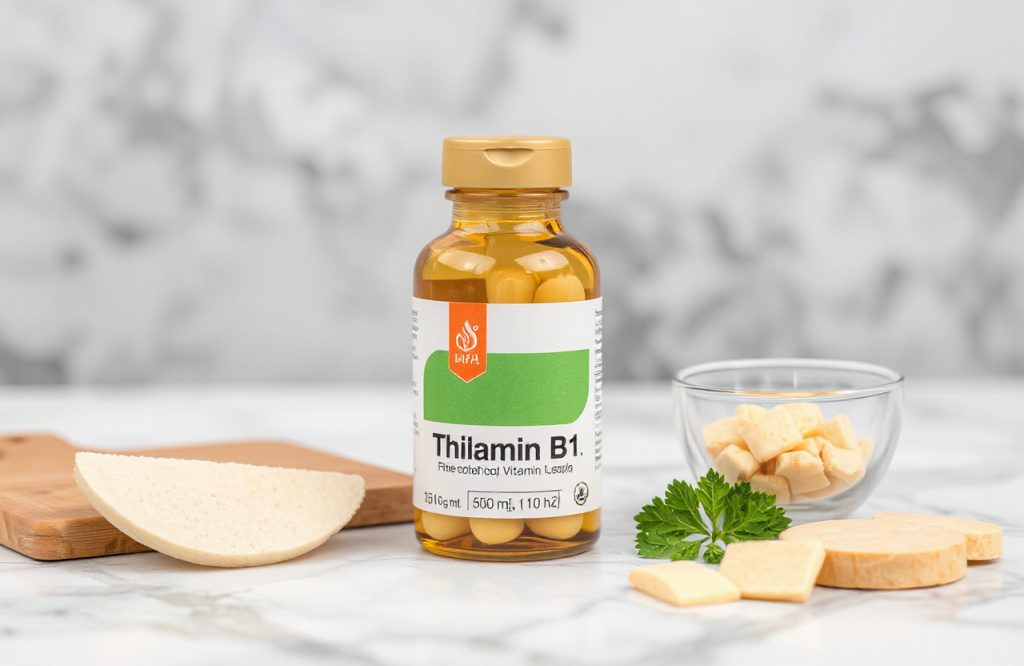
What is Thiamin?
Thiamin, commonly referred to as vitamin B1, is one of the essential B vitamins. This nutrient is vital for maintaining optimal health and must be obtained regularly through diet. As a water-soluble vitamin, thiamin is not easily stored in the body and requires daily consumption.
Sources of Thiamin
Dietary Sources
Thiamin is often added to whole grains such as brown rice, bread, lentils, and cereals in many countries. It is also included in fortified infant formulas. Natural sources of thiamin include pork and fish, as well as trace amounts found in fruits and milk. Although cooking can reduce thiamin levels, most dietary sources are typically cooked or need to be cooked, making this loss unavoidable.
Supplemental Forms
Thiamin is available in dietary supplements, including multivitamins, vitamin B-complex supplements, and standalone thiamin supplements. It can be found in forms such as thiamin mononitrate and thiamin hydrochloride, both of which are water-soluble, or as fat-soluble benfotiamine. All forms are converted to thiamin in the body.
Importance of Thiamin
Thiamin plays a crucial role in various bodily functions. It is essential for metabolizing food, helping to break down sugars, fats, and amino acids into fuel for cells. This process is vital for maintaining cell health and proper function. Additionally, thiamin supports nervous system and brain function, as its metabolite, thiamin triphosphate, is important for the integrity of neuronal membranes.
Recommended Dietary Allowance (RDA) for Thiamin
The RDA for thiamin is 1.2 mg per day for men, 1.1 mg for women, and 1.4 mg for pregnant and lactating women. For children, the RDA varies: 0.9 mg for those aged 9 to 13 years, 0.6 mg for ages 4 to 8, 0.5 mg for ages 1 to 3, 0.3 mg for infants aged 7 to 12 months, and 0.2 mg for infants under 6 months. Infants can meet their thiamin needs through breast milk or formula. These values, provided by the National Institutes of Health, represent the daily intake sufficient for 97-98% of healthy individuals. Regular consumption of whole grains can help meet the RDA, with half a cup of thiamine-enriched white rice providing 117% of the daily requirement.
Potential for Excess Thiamin
As a water-soluble vitamin, thiamin poses a low risk for toxicity. Absorption significantly decreases at doses above 5 mg, leading to no established Upper Limit (UL) for daily intake. However, excessive thiamin intake may still lead to side effects, and the UL indicates the maximum daily intake unlikely to cause adverse health effects.
Benefits of Thiamin
Treatment for Wernicke-Korsakoff Syndrome
Thiamin supplementation has been explored as a treatment for Wernicke-Korsakoff syndrome (WKS), a neuropsychiatric condition often seen in chronic alcoholics. However, the effectiveness and appropriate therapeutic dosage remain inconclusive.
Impact on Type 2 Diabetes
One study indicated that patients with type 2 diabetes who received high doses of thiamin supplements exhibited improved glucose tolerance and lower fasting blood glucose levels, highlighting thiamin’s role in carbohydrate metabolism. Further research is necessary to determine the efficacy and ideal dosing for this application.
Heart Health
Research has shown a higher prevalence of thiamin deficiency in individuals with congestive heart failure. A small study found that thiamin supplementation improved left ventricular ejection fraction in patients with this condition compared to a placebo. Larger studies are needed to confirm these findings.
Thiamin Deficiency
Thiamin deficiency is relatively rare in North America due to grain fortification. However, certain populations are at greater risk.
At-Risk Groups
- Individuals with chronic alcoholism, as ethanol impairs thiamin absorption and may lead to inadequate nutrition.
- Older adults, who may experience decreased absorption due to age, medications, and higher rates of chronic diseases.
- People who have undergone weight loss or bariatric surgery, which can affect nutrient absorption.
- Individuals with certain medical conditions, such as HIV/AIDS and diabetes, may also be more prone to deficiency.
Severe thiamin deficiency can lead to beriberi, characterized by muscle wasting and peripheral neuropathy. Mild deficiencies may result in unexplained weight loss, decreased immunity, confusion, muscle weakness, and peripheral neuropathy.
Thiamin Supplementation
Thiamin deficiency can be addressed with high doses of thiamin supplements or injections, alongside a balanced diet. If you suspect a deficiency or are at risk, consider having your blood levels tested. Always consult a healthcare professional before starting any vitamin or mineral supplement to avoid potential interactions with medications or health conditions.
References
- Alaei Shahmiri, F., Soares, M. J., Zhao, Y., & Sherriff, J. (2013). High-dose Thiamine Supplementation Improves Glucose Tolerance in Hyperglycemic Individuals: A Randomized, Double-Blind Cross-Over Trial. Eur J Nutr, 52(7), 1821-1824. doi:10.1007/s00394-013-0534-6
- Butterworth, R. F. (2003). Thiamin Deficiency and Brain Disorders. Nutr Res Rev, 16(2), 277-284. doi:10.1079/NRR200367
- Day, E., Bentham, P. W., Callaghan, R., Kuruvilla, T., & George, S. (2013). Thiamine for Prevention and Treatment of Wernicke-Korsakoff Syndrome in People who Abuse Alcohol. Cochrane Database Systemic Review, 2013(7). doi:10.1002/14651858.CD004033.pub3
- Dinicolantonio, J. J., Lavie, C. J., Niazi, A. K., O’Keefe, J. H., & Hu, T. (2013). Effects of Thiamine on Cardiac Function in Patients With Systolic Heart Failure: Systematic Review and Metaanalysis of Randomized, Double-Blind, Placebo-Controlled Trials. Oschner J., 13(4), 495-499.
- Manzetti, S., Zhang, J., & Van der Spoel, D. (2014). Thiamin function, metabolism, uptake, and transport. Biochemistry, 53(5), 821-835. doi:10.1021/bi401618y
- Thiamin – Fact sheet for health professionals. (2020, June 3). Retrieved July 03, 2020, from https://ods.od.nih.gov/factsheets/Thiamin-HealthProfessional/
- Thiamin – Vitamin B1. (n.d.). Retrieved July 03, 2020, from https://www.hsph.harvard.edu/nutritionsource/vitamin-b1/
- Xanthakos, S. A. (200). Nutritional Deficiencies in Obesity and After Bariatric Surgery. Pediatric Clin North Am, 56(5), 1105-1121. doi:10.1016/j.pcl.2009.07.002