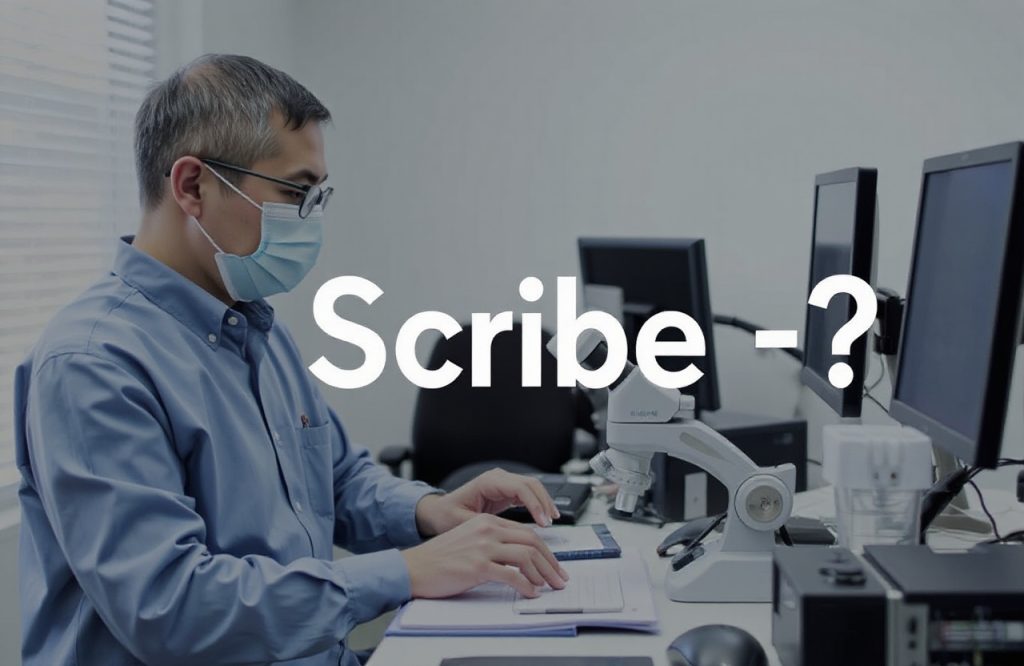
Transformative Role of AI in Healthcare
Introduction to AI Medical Scribes
Artificial intelligence (AI) has emerged as a revolutionary force across various sectors, with healthcare being a prominent example. A particularly impactful application is the AI medical scribe, a digital tool that streamlines clinical documentation and enables healthcare providers to focus more on patient care. This article delves into the nature of AI medical scribes, their functionality, and the advantages and challenges they present in contemporary healthcare practices.
What Is an AI Medical Scribe?
An AI medical scribe is a software-based tool that automates the process of medical documentation during patient consultations. These AI systems capture dialogues between patients and healthcare providers, organize the relevant information, and seamlessly integrate it into electronic health records (EHRs). Unlike traditional human scribes, AI scribes operate in real-time, providing accessibility at any time. They are capable of recording detailed notes that include patient symptoms, diagnoses, and treatment plans, allowing clinicians to focus entirely on patient interactions.
How Do AI Medical Scribes Work?
AI medical scribes leverage advanced technologies such as machine learning and natural language processing (NLP) to manage medical data efficiently. Their operational framework typically includes the following steps:
Voice Recognition
The AI scribe listens to real-time conversations between patients and providers, accurately capturing spoken words, medical terminology, and contextual nuances.
Data Structuring
The transcribed information is organized into structured formats, categorizing essential details such as medical history, current symptoms, and proposed treatment plans.
Integration with EHRs
After processing, the data is automatically entered into the clinic’s EHR system, making it readily accessible to the healthcare team. Many AI scribes also adapt over time, learning individual providers’ preferences to enhance their functionality and minimize manual corrections.
Research Insights
A 2022 study featured in the Journal of Medical Internet Research investigated the application of artificial intelligence in diagnosing influenza through pharyngeal images combined with clinical data. The findings revealed that the AI model achieved an impressive 90% accuracy in identifying PCR-confirmed influenza cases, surpassing the diagnostic precision of some physicians. This underscores AI’s potential to improve diagnostic processes and lessen dependence on traditional, time-intensive methods.
Dr. Sho Okiyama, a co-author of the study, noted, “The development of this AI model marks a significant step forward for timely and accurate diagnosis.”
Benefits of AI Medical Scribes
AI medical scribes have proven to be transformative, particularly in enhancing the relationship between patients and providers. By assuming documentation duties, they allow clinicians to maintain eye contact and engage in more meaningful interactions with patients.
Time Savings
Another significant benefit is the time saved, as healthcare providers can redirect hours often spent on administrative tasks towards direct patient care or professional development.
Cost-Effectiveness
Financially, AI scribes can lead to reduced long-term costs, especially in high-volume practices where documentation requirements are extensive. Although initial investments may appear substantial, the overall decrease in manual errors and the necessity for additional human support staff render them a cost-effective solution in the long run.
Challenges of AI Medical Scribes
Despite their numerous advantages, AI medical scribes face certain challenges. Accuracy is a primary concern, particularly during the initial implementation phase. Misrecognition of medical terminology or context can result in incorrect documentation, necessitating manual corrections.
Privacy Concerns
Privacy is another critical issue, as the management of sensitive patient data must adhere to regulations such as HIPAA.
Adoption Barriers
The successful adoption of AI scribes is also contingent on healthcare professionals’ willingness to incorporate them into established workflows. Resistance to change and the learning curve associated with new technology can hinder implementation. However, with adequate training and continuous support, these challenges can be effectively addressed.
Conclusion
AI medical scribes are revolutionizing healthcare documentation by automating laborious tasks and enhancing operational efficacy. They enable clinicians to devote more attention to patients while maintaining accurate records. Although challenges such as privacy concerns and accuracy issues persist, the accumulating research highlights the significant potential of these innovative tools.