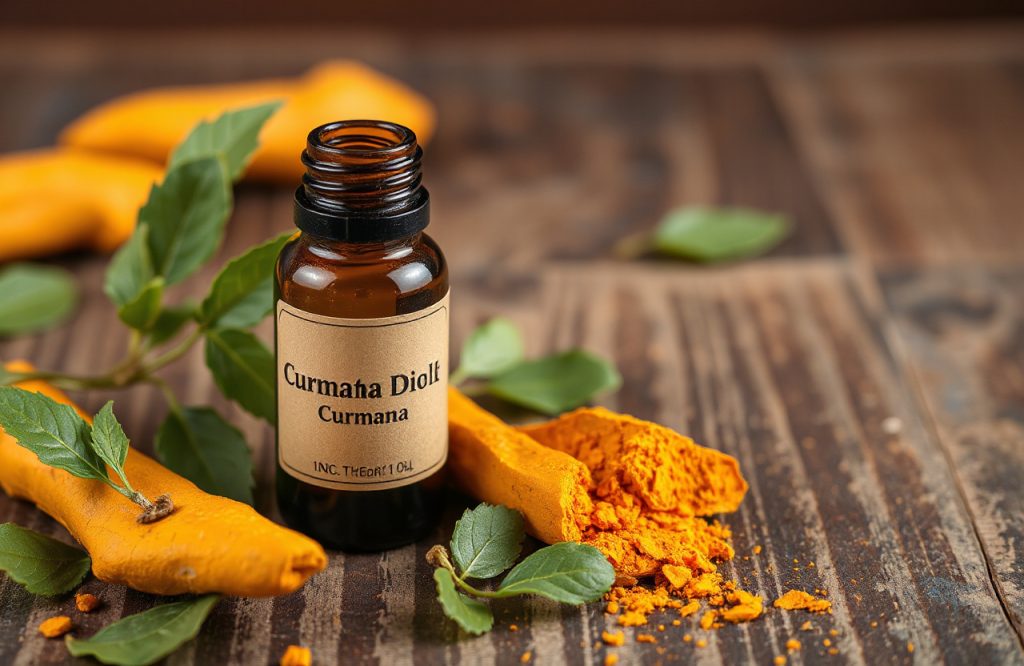
Exploring the Therapeutic Potential of Curcuma Herb Essential Oils
Introduction to Curcuma Herbs
Curcuma herbs are renowned for their diverse applications, particularly in Southeast Asia, where they have been utilized for thousands of years. These herbs are recognized for their potential antioxidative, antimicrobial, anti-inflammatory, and cytotoxic effects. A recent study conducted by researchers in China delves into the composition and therapeutic properties of essential oils extracted from four distinct Curcuma species.
Study Overview
The research aims to identify the varying chemical compositions of essential oils derived from four Curcuma species and explore their specific therapeutic applications. The focus is on determining the most effective uses for each species. Lanyue Zhang and her team from the Institute of Natural Medicine and Green Chemistry at the School of Chemical Engineering and Light Industry in Guangdong, China, reported their findings in the journal *Chemistry and Biodiversity*.
Methodology
Using gas chromatography and mass spectroscopy (GC-MS), the essential oils from four Curcuma species—C. longa, C. phaeocaulis, C. wenyujin, and C. kwangsiensis—were extracted and analyzed for their component compounds. Each of these compounds demonstrates unique therapeutic activities when tested in vitro.
Antioxidant Activity
The DPPH radical-scavenging assay was employed to evaluate the antioxidant capabilities of the essential oils. Among the tested species, the essential oil extracted from C. kwangsiensis exhibited the strongest radical-scavenging ability, indicating superior antioxidant properties. At a dosage of 50 mg/kg, all essential oils outperformed ibuprofen. However, when the dosage was increased to 100 mg/kg, ibuprofen showed more pronounced effects than any of the essential oils. Notably, C. kwangsiensis mirrored the anti-inflammatory effects of ibuprofen at the higher dosage.
Antimicrobial Activity
The study assessed the antimicrobial properties of the essential oils by measuring their capacity to inhibit microbial growth through minimum inhibitory concentration (MIC) testing. C. phaeocaulis demonstrated optimal antimicrobial activity against both gram-negative and gram-positive bacteria, while C. wenyujin exhibited the lowest MIC against fungal strains. Positive controls, including streptomycin and bifonazole, were significantly more effective than the Curcuma essential oils in this regard.
Cytotoxic Activity
Cytotoxicity was evaluated similarly to antimicrobial testing, where the minimum concentration required to inhibit the growth of two cancer cell lines (prostate cancer and hepatoma) by 50% was measured. Both C. wenyujin and C. phaeocaulis displayed notable cytotoxic activity against the prostate cancer cell line, though the positive control, paclitaxel, proved to be markedly more effective. C. longa was identified as having the best anticancer properties against hepatoma cells.
Conclusion
The findings underscore the complexity of Curcuma herbs, which contain a variety of molecules, each contributing different biological activities. By isolating and analyzing the essential oils from these four Curcuma species, the study provides valuable insights into their therapeutic benefits, guiding the optimal use of each herb species.
Reference
Zhang L, Yang Z, Chen D, et al. Variation on composition and bioactivity of essential oils of four common Curcuma herbs. *Chem Biodivers*. 2017.