New Insights into Autism Genetic Factors
Survey Findings on Gene Mutations
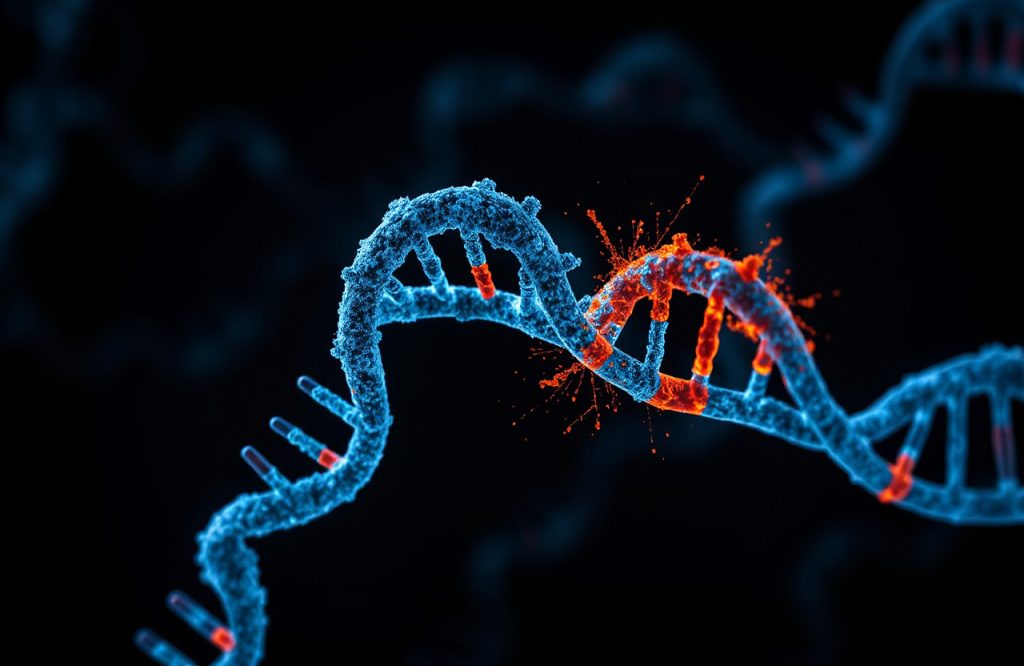
A comprehensive survey comparing the genomes of individuals with and without autism has uncovered that mutations in regulatory gene regions significantly contribute to autism. Researchers now suggest that a person’s risk of developing autism is heavily influenced by changes in gene expression stemming from new mutations in paternal DNA. This indicates that, rather than identifying a single gene or a set of genes responsible for autism, researchers can pinpoint specific DNA alterations associated with an autism diagnosis. The focus is on the patterns of gene activation and deactivation rather than the proteins produced by these genes.
Understanding Autism Spectrum Disorder
Autism spectrum disorder (ASD) is a developmental condition that affects social interactions and communication abilities. In Canada, it is the most common developmental disorder, impacting approximately 2 to 20 individuals per 10,000, predominantly affecting males. Most autism cases are diagnosed around the age of three, although some individuals may receive a diagnosis later when symptoms of social impairment become more apparent. Common signs in autistic children include a lack of response to their name, communication difficulties, self-injurious behavior, and atypical reactions to various situations.
Complex Causes of Autism
The origins of autism are multifaceted, influenced by various factors that affect brain development. Genetics is widely recognized as a critical component in the inheritance of autism. De novo DNA mutations, which occur randomly during sperm, egg, or fetal development, account for approximately 25% of autism cases. Other genetic anomalies, such as trisomy of chromosome 21, which leads to Down syndrome, also contribute to autism. Despite numerous advancements in autism genetics over the past decade, the role of cis-regulatory elements (CREs) in autism has remained unclear due to technical challenges.
What Are Cis-Regulatory Elements?
Cis-regulatory elements (CREs) are small DNA segments that regulate nearby genes. They function like a manager overseeing employees, determining which genes should be activated or silenced. Mutations within CREs can significantly affect the expression of adjacent genes, potentially leading to the development of diseases like autism spectrum disorder. Despite advancements in technology, monitoring CREs remains challenging due to overwhelming genetic background noise, complicating efforts to discern significant patterns.
Innovative Software for CRE Impact Analysis
In a recent study published in the journal Science, researchers developed a groundbreaking software pipeline to analyze the impact of CREs on autism. They sequenced the genomes of 829 families, which included 880 autistic individuals and 630 non-autistic controls. The analysis revealed a significant association between certain CRE variants and childhood autism. Notably, these autism-associated CREs were more frequently inherited from paternal DNA, with most de novo CRE mutations in autistic children originating from fathers. Researchers hypothesize that this paternal bias may not be due to a higher mutation rate in paternal sperm but rather because maternal eggs are more sensitive to these mutations, potentially leading to egg attrition. Nonetheless, maternal genetic variations are also acknowledged as vital in autism inheritance.
Implications of CRE Inheritance in Autism
The findings present a new perspective on autism spectrum disorder inheritance, suggesting that paternal CRE contributions have a moderate effect while maternal genetics play a more substantial role. The study indicates that CREs, as gene regulators, are significant in autism inheritance, contributing to about 0.77% of autism cases. Furthermore, the research underscores that autism-linked CREs are more frequently inherited from fathers, highlighting the potential sensitivity of maternal genetics to fluctuations.
Conclusion
This research enhances the understanding of the genetic factors associated with autism, emphasizing the complex interplay between paternal and maternal contributions in the disorder’s inheritance. Continued exploration of CREs may lead to further insights into the genetic underpinnings of autism spectrum disorder.
References
(1) Brandler, W. M. et al. Paternally inherited cis-regulatory structural variants are associated with autism. Science (80-. ). 360, 327–331 (2018).
(2) Statistics Canada. Section C – Childhood conditions. Part 2a – Autistic disorder. Updated: November 27, 2015. http://www.statcan.gc.ca/pub/82-619-m/2012004/sections/sectionc-eng.htm