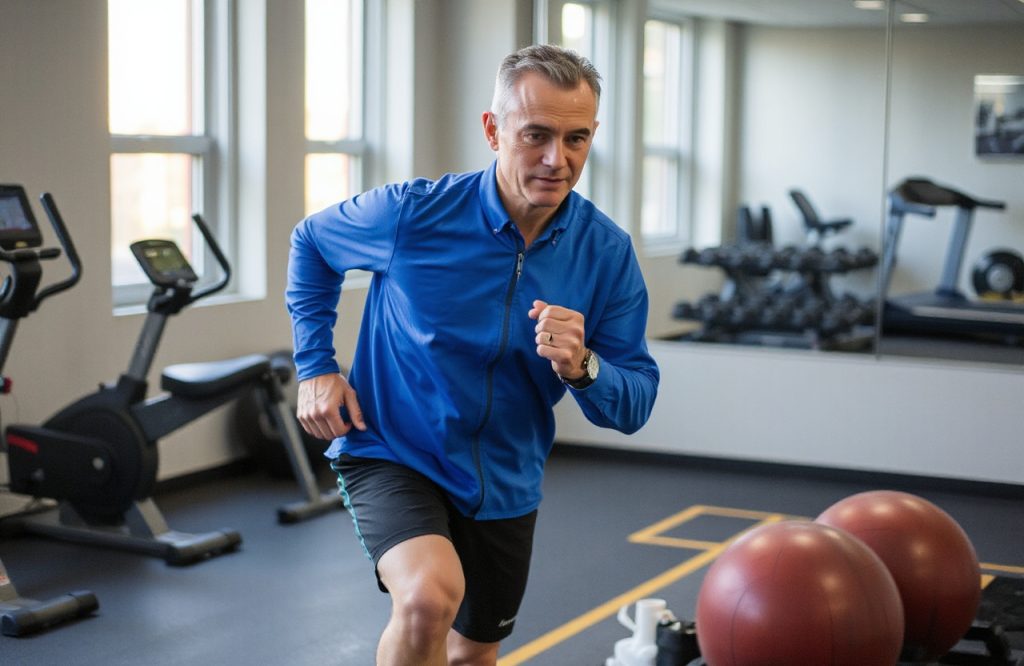
Comparing Anti-Aging Effects of Different Exercise Types
Understanding Exercise and Aging
Exercise is widely recognized for its role in disease prevention and promoting healthy aging. However, the specific impacts of various exercise modalities on cellular aging remain unclear.
The Role of Telomeres in Aging
Our cells house DNA organized into chromosome structures, which contain the genetic information essential for growth and function. Telomeres, special DNA sequences at the ends of chromosomes, safeguard our genetic material. As we age, these telomeres shorten, leading to cellular death due to unprotected chromosomal DNA. This shortening process is partially regulated by the enzyme telomerase, which can counteract telomere shortening and even lengthen them. Consequently, telomere length and telomerase activity serve as indicators of cellular aging.
Research Overview
Study Design and Methodology
Researchers in Germany conducted a study to analyze the effects of three forms of exercise on telomere length and telomerase activity: aerobic endurance training, high-intensity interval training, and resistance training. Their findings were published in the European Heart Journal.
The study involved 266 previously inactive adults aged 30 to 60 years, who were randomly assigned to one of four groups: a control group with no exercise, a group for endurance training (continuous running), a group for high-intensity interval training (alternating between intense and slow running), and a group for resistance training (using eight gym devices for strength training). Participants in the exercise groups engaged in three 45-minute training sessions per week for six months. Blood samples were collected at the beginning and after six months to measure white blood cell telomere length and telomerase activity.
Study Findings
Out of the initial participants, 124 volunteers completed the study, with dropouts primarily due to failure to adhere to the exercise programs. Results indicated that both the endurance training and high-intensity interval training groups experienced increased telomerase activity and lengthened telomeres over the six-month duration. In contrast, no significant changes were observed in the resistance training group.
Implications of the Study
Effectiveness of Exercise on Cellular Aging
The study highlights that different exercise modalities yield varying effects on cellular aging. Dr. Christian Werner from Saarland University noted, “Our data support the European Society of Cardiology’s current guideline recommendations that resistance exercise should be complementary to endurance training rather than a substitute.”
The researchers propose that the cellular anti-aging effects observed may be linked to an increase in blood nitric oxide levels associated with endurance and resistance training. Prof. Ulrich Laufs from Leipzig University emphasized the rarity of prospective randomized controlled training studies, attributing this to the substantial effort required and the lack of industry funding. He expressed hope that their study would encourage further exploration in this area.
References
Werner CM, Hecksteden A, Morsch A, et al. Differential effects of endurance, interval, and resistance training on telomerase activity and telomere length in a randomized, controlled study. European Heart Journal (2018) 00, 1-13. Doi:10.1093/eurheart/ehy585.
Press release: Endurance but not resistance training has anti-aging effects. European Society of Cardiology. https://www.eurekalert.org/pub_releases/2018-11/esoc-ebn112618.php