Progress in the Fight Against H5N1 Flu in North America
Development of a New H5N1 Vaccine
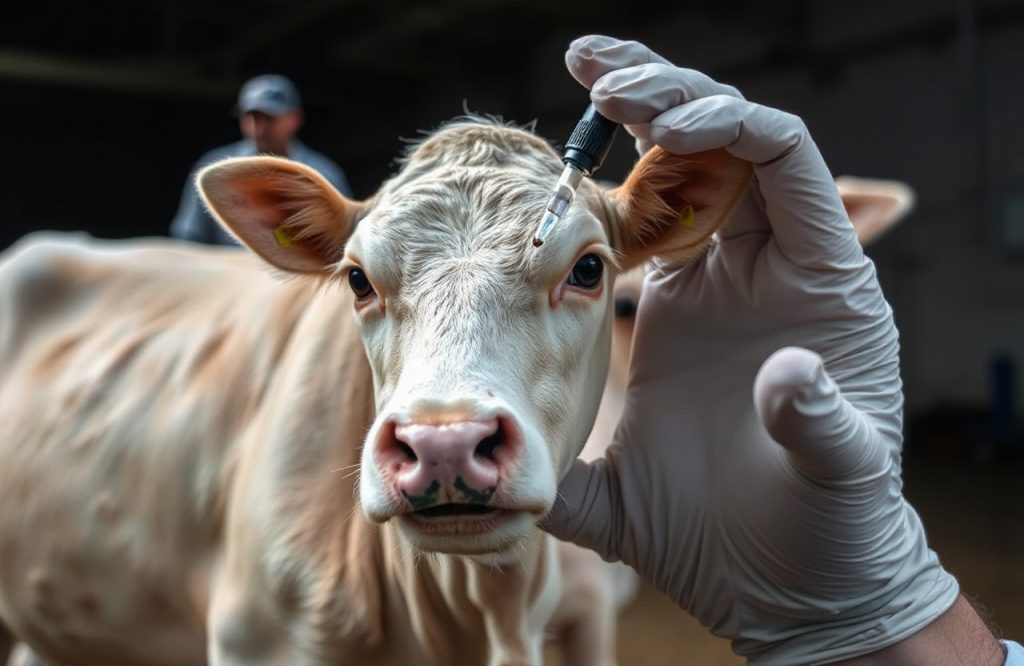
The battle against the H5N1 flu in North America continues, but there is promising news regarding a cutting-edge vaccine designed for the highly virulent strain currently affecting cattle. Traditional seasonal flu vaccines do not offer protection against H5N1, prompting vaccine scientists to work swiftly to create an effective immunization before the virus can transmit between humans.
Recent reports from the National Institutes of Health (NIH) indicate that researchers have successfully developed a vaccine against the bird flu virus spreading in dairy herds. According to findings published in *Nature Communications*, preclinical tests have shown that this novel vaccine provides complete protection.
Understanding the H5N1 Virus Strain
The strain of H5N1 currently circulating has raised significant concerns among public health officials across North America. The U.S. Centers for Disease Control and Prevention (CDC) has been preparing for potential outbreaks for several years. Scientists are now focused on creating what they refer to as a Candidate Vaccine Virus (CVV). This process involves making educated predictions about which H5N1 strains may circulate in the near future, based on a database of genetic sequences from previously identified variants.
Once a viable candidate is identified, researchers assemble a sample virus using their DNA database. This design closely resembles the actual flu virus, allowing for the production of a vaccine that could effectively mitigate an H5N1 outbreak. The CDC has already amassed a stockpile of candidate vaccines targeting older H5N1 variants; however, researchers from Rocky Mountain University have expressed concerns that the new, more virulent H5N1 strain is evolving quickly.
The Virus’s Evolution and Its Implications
The H5N1 virus has transitioned from birds to dairy cattle, resulting in significant mutations. This rapid evolution raises questions about the effectiveness of existing stockpiled vaccines.
To address this issue, researchers have developed an updated vaccine derived from a current version of the virus isolated from a U.S. dairy cow. The Clade 2.3.4.4b strain of H5N1 has mutated beyond what the CDC typically anticipates, complicating the vaccine development process. By analyzing the genetic sequence of this strain, the Rocky Mountain team was able to create a vaccine specifically targeting the variant spreading among U.S. dairy herds.
Testing the Vaccine’s Efficacy
In their study, researchers vaccinated three groups of mice: one group received the new vaccine and was challenged with the Clade 2.3.4.4b H5N1 virus, another group was given an older vaccine targeting a previous strain, and a control group received a vaccine designed for an unrelated virus.
Four weeks post-vaccination, the mice were euthanized for analysis of their immune responses. Those inoculated with the new vaccine exhibited a robust immune response against the Clade 2.3.4.4b strain, showing high antibody levels capable of neutralizing the virus and providing complete protection from a lethal dose. The vaccinated mice experienced minimal side effects. In contrast, the older H5N1 vaccine, which was effective against a strain prevalent during the 2004 outbreak in Hong Kong, performed poorly against the current variant, suggesting that the stockpiled candidate vaccines may be outdated.
The Importance of Ongoing Research
This research underscores the critical role of the CDC in maintaining an updated stockpile of vaccines and highlights the ongoing efforts of flu researchers to identify and characterize new influenza strains. As developments in vaccine research continue, monitoring will be essential to address the evolving threat of H5N1.
References
Hawman, D.W., Tipih, T., Hodge, E. et al. Clade 2.3.4.4b but not historical clade 1 HA replicating RNA vaccine protects against bovine H5N1 challenge in mice. Nat Commun 16, 655 (2025). https://doi.org/10.1038/s41467-024-55546-7
CDC. H5 Bird Flu: Current Situation. Avian Influenza (Bird Flu). January 27, 2025. Accessed January 28, 2025. https://www.cdc.gov/bird-flu/situation-summary/index.html
CDC. Prevention and Antiviral Treatment of Avian Influenza A Viruses in People. Avian Influenza (Bird Flu). November 6, 2024. Accessed January 28, 2025. https://www.cdc.gov/bird-flu/prevention/index.html
CDC. Making a Candidate Vaccine Virus (CVV) for a HPAI (Bird Flu) Virus. Avian Influenza (Bird Flu). October 2, 2024. Accessed January 28, 2025. https://www.cdc.gov/bird-flu/php/severe-potential/candidate-vaccine-virus.html