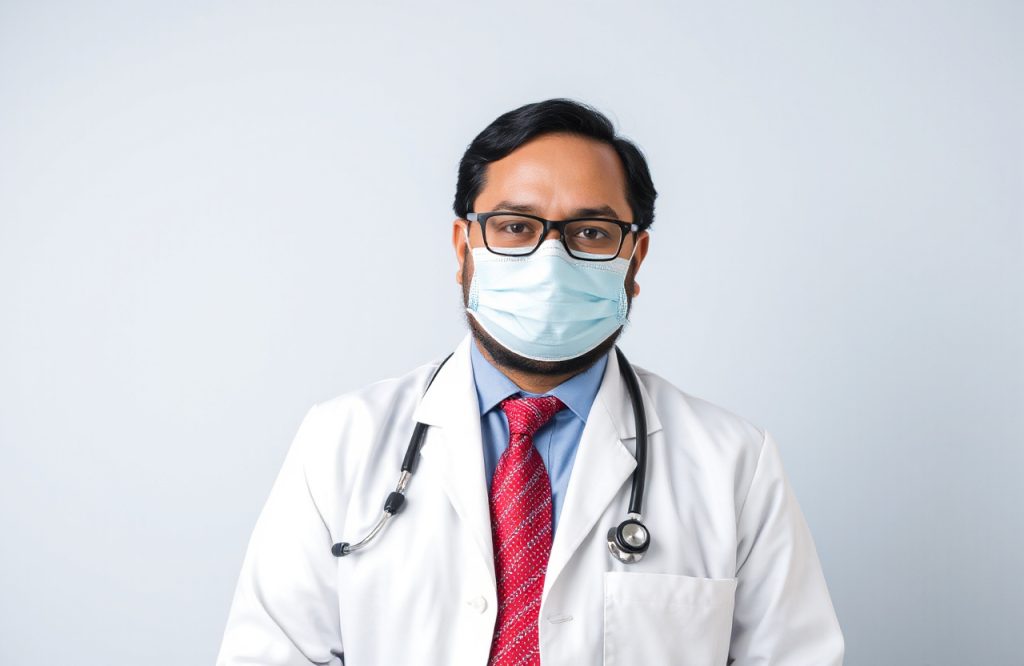
Union Health Minister Calls on Young Doctors to Contribute to Society
Infrastructure and Facilities in Indian Healthcare
Lucknow: During a recent address, Union Health Minister Jagat Prakash Nadda emphasized the importance of utilizing existing healthcare infrastructure in the country. He urged young doctors to refrain from complaining about inadequate facilities and instead make the most of the resources available to them. Speaking at the 21st convocation ceremony of King George’s Medical University (KGMU), Nadda stated, “Young doctors can no longer complain about a lack of facilities or infrastructure in the country.”
Opportunities for Medical Professionals
Nadda acknowledged that while some doctors choose to practice abroad, they should not attribute their decision to perceived shortcomings in Indian facilities. He remarked, “Institutions are here, facilities are here and infrastructure is also here. Make use of them.” He highlighted the transformation in medical education in India under Prime Minister Narendra Modi, noting that the number of All India Institute of Medical Sciences (AIIMS) has increased to 23.
Improvements in Medical Education
The Health Minister recalled a time when meritorious students left the country in search of better opportunities, often citing a lack of facilities as the reason. “Today, I can say with pride that while there was just one AIIMS before, now there are 23 AIIMS under the leadership of Prime Minister Narendra Modi,” he added. Nadda emphasized that students can no longer claim that facilities and infrastructure are inadequate.
Ayushman Bharat and Health Services
Nadda highlighted the significance of the Ayushman Bharat scheme, which provides health coverage of Rs 5 lakh to over 62 crore people, making it the “world’s largest” health program. He urged young doctors to recognize that medical education is a privilege, not a birthright, and to contribute positively to society. “On average, Rs 35 lakh in expenditure is incurred on making a doctor,” he noted.
Encouragement for Young Medical Graduates
In his address, Nadda praised the dedication of young doctors who work long hours and encouraged them to find satisfaction in their work rather than seeking external validation. He urged graduates to embrace emerging technologies and dedicate their efforts to humanitarian causes.
KGMU’s Contributions and Achievements
The convocation was attended by notable figures, including Governor Anandiben Patel, Union Minister of State for Finance Pankaj Chaudhary, and Deputy Chief Minister Brajesh Pathak. Nadda congratulated both the students and faculty for their accomplishments, stating that the success of graduates brings immense joy to families.
He commended KGMU for its advancements in cornea, liver, and kidney transplants, recognizing the university’s esteemed history and global reputation. “If I say that KGMU has not only served the nation but has served humanity across the world, it would not be an exaggeration,” he remarked.
Faculty Requirements for MBBS Admissions
In a related matter, Nadda provided insights on faculty requirements for medical colleges as per the Minimum Standard Requirement (MSR) Regulations 2023, established by the National Medical Commission (NMC). For various capacities of MBBS seats, the required faculty includes:
– **For 50 MBBS seats:** 14 Professors, 20 Associate Professors, 25 Assistant Professors, 15 Tutors, and 23 Senior Residents.
– **For 100 MBBS seats:** 17 Professors, 27 Associate Professors, 41 Assistant Professors, 25 Tutors/Demonstrators, and 40 Senior Residents.
– **For 150 MBBS seats:** 19 Professors, 40 Associate Professors, 55 Assistant Professors, 32 Tutors/Demonstrators, and 58 Senior Residents.
– **For 200 MBBS seats:** 20 Professors, 51 Associate Professors, 70 Assistant Professors, 40 Tutors/Demonstrators, and 73 Senior Residents.
– **For 250 MBBS seats:** 20 Professors, 62 Associate Professors, 86 Assistant Professors, 43 Tutors/Demonstrators, and 80 Senior Residents.